Table of Contents
ToggleIf you’ve ever unloaded your dishwasher only to find cloudy glasses and water-spotted plates, you’re not alone. Many homeowners struggle with spotty dishes even after a full wash cycle. The culprit isn’t always your dishwasher, it’s often the lack of a simple additive that most people overlook. Dishwasher rinse aid, sometimes called a drying agent or rinse agent, is designed to eliminate water spots, speed up drying time, and leave your dishes streak-free. While it’s not technically required to run your dishwasher, skipping it means you’re missing out on the machine’s full cleaning potential. Here’s everything you need to know about what rinse aid does, why it matters, and how to use it properly.
Key Takeaways
- Dishwasher rinse aid eliminates water spots and mineral deposits by reducing water’s surface tension, allowing it to sheet off dishes rather than bead up and leave residue.
- Using rinse aid significantly improves drying performance and reduces the time dishes stay wet after a cycle, especially for plastic containers that cool quickly.
- Rinse aid dispensers are located near the detergent compartment and should be filled to the max line every 1 to 3 months—most bottles cost under $10 and last several months.
- Hard water areas benefit most from dishwasher rinse aid, as mineral deposits like calcium and magnesium cause cloudiness and buildup inside the machine over time.
- All-in-one detergent pods with built-in rinse aid are less effective than using a dedicated liquid rinse aid in the dispenser for optimal sheeting and drying.
- Check your water heater temperature (at least 140°F) and inspect the rinse aid dispenser for clogs if water spots persist after adding rinse aid to your dishwasher.
What Is Dishwasher Rinse Aid and How Does It Work?
Dishwasher rinse aid is a liquid additive that reduces the surface tension of water during the final rinse cycle. It’s not a detergent, it doesn’t clean your dishes. Instead, it helps water sheet off plates, glasses, and silverware rather than clinging in droplets that leave behind mineral deposits and spots.
Most rinse aids contain surfactants (surface-active agents) that break down water’s natural tendency to bead up. When water beads, it evaporates slowly and leaves behind whatever minerals were dissolved in it, usually calcium and magnesium from hard water. By encouraging water to flow off in thin sheets, rinse aid allows dishes to dry faster and more completely.
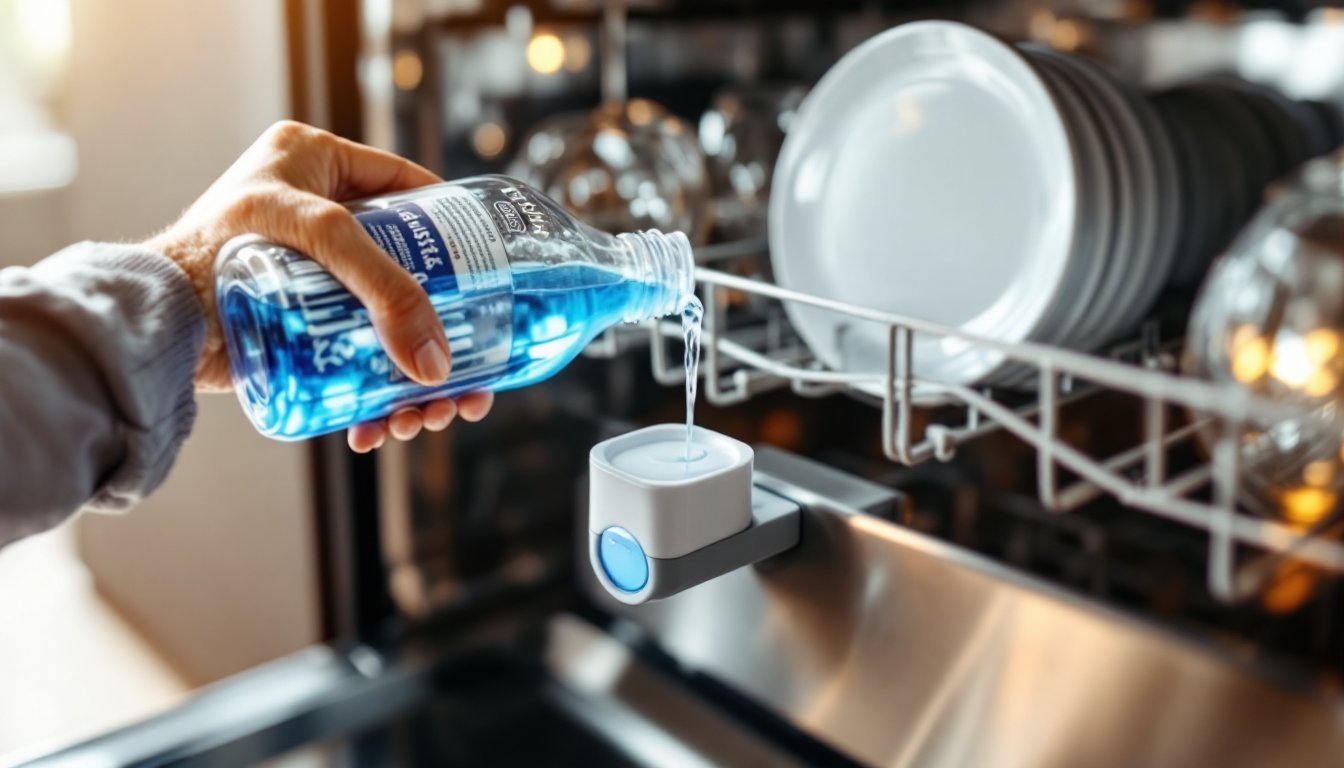
Common products like Jet-Dry and Finish rinse aid are widely available and work in any dishwasher with a rinse aid dispenser. The dispenser is typically a small reservoir near the detergent cup, marked with a clear or blue cap. You fill it once every few weeks, and the dishwasher automatically releases a small amount during the final rinse.
Some people confuse rinse aid with detergent booster or drying accelerator, but it’s specifically formulated to work after the wash cycle. If you’ve been wondering what rinse aid for dishwasher actually does, think of it as a protective finish that preps your dishes for air drying without residue.
Why Your Dishwasher Needs Rinse Aid
Do you need rinse aid for dishwasher performance? Technically, no, your machine will still wash dishes without it. But skipping it means dealing with preventable issues that make your dishwasher less effective and your dishes less presentable.
Hard Water Stains and Mineral Deposits
If you live in an area with hard water (water high in dissolved minerals), you’ve probably noticed a white film on glassware or a chalky buildup on the interior of your dishwasher. That’s mineral residue left behind as water evaporates. Rinse aid doesn’t remove minerals from your water, but it does prevent them from settling on your dishes.
By reducing water’s surface tension, rinse aid encourages faster runoff. Less water clinging to surfaces means fewer minerals left behind. Over time, this can also reduce buildup inside the dishwasher itself, which can clog spray arms and reduce wash performance. It’s a preventive measure that keeps both your dishes and your machine in better shape.
Some dishwashers have a water hardness setting that adjusts rinse aid dosage. Check your owner’s manual, most recommend increasing the rinse aid level if you have hard water. You might also consider a water softener for whole-home treatment, but rinse aid is a simpler, lower-cost solution for dishwasher-specific issues.
Faster Drying and Reduced Water Spots
Even if you don’t have hard water, rinse aid improves drying performance. Modern dishwashers often use condensation drying, which relies on residual heat to evaporate water. If water beads up instead of sheeting off, it takes longer to dry, and you’re more likely to open the door to wet dishes.
Using a dishwasher liquid rinse aid helps dishes come out dry and ready to put away. According to experts, adding rinse aid to the dishwasher dispenser helps dishes dry more thoroughly, especially plastic items that don’t retain heat well. Plastic containers, in particular, benefit from rinse aid because they cool faster than glass or ceramic and often stay wet without it.
If you’re tired of towel-drying dishes after every cycle, rinse aid is the simplest fix. It’s a small upfront cost, usually under $10 for a bottle that lasts several months, and it eliminates a daily chore.
How to Use Rinse Aid in Your Dishwasher
Knowing where to put rinse aid in dishwasher models is straightforward once you locate the dispenser. It’s almost always built into the door, next to or near the detergent compartment. Look for a small cap labeled “rinse aid” or marked with a water droplet icon. On most machines, it twists off counterclockwise.
Here’s how to add rinse aid to dishwasher dispensers step-by-step:
- Open the rinse aid compartment. The cap usually twists or flips open. Some models have a spring-loaded cap that pops off.
- Pour in liquid rinse aid slowly. Fill to the max line, don’t overfill. The reservoir holds about 3 to 5 ounces depending on the model.
- Wipe up any spills immediately. Rinse aid is slippery and can cause excess sudsing if it gets into the wash chamber.
- Adjust the dispenser setting if needed. Most dishwashers have a dial (usually numbered 1–5) that controls how much rinse aid is released per cycle. Start at the middle setting and adjust up if you still see spots, or down if you notice a filmy residue.
- Close the cap securely. You should hear or feel it click into place.
You’ll know it’s time to refill when the rinse aid indicator light comes on, or when you notice water spots returning. In typical use, a full reservoir lasts 1 to 3 months.
Some all-in-one detergent pods claim to include rinse aid, but they don’t replace a dedicated dishwasher rinse agent. Built-in rinse aid in pods is minimal and doesn’t provide the same level of sheeting action. For best results, use both: a quality detergent and a separate rinse aid in the dispenser.
If your dishwasher doesn’t have a rinse aid dispenser (rare in modern models, but common in older or compact units), you can try adding a small amount of white vinegar to a dishwasher-safe cup on the top rack. It’s not as effective as commercial rinse aid, but it can help reduce spots in a pinch.
Choosing the Right Rinse Aid for Your Home
Most dishwasher rinse aid products work essentially the same way, but there are a few differences worth noting. Finish Jet-Dry and Cascade Rinse Aid are two of the most widely available brands, and both perform well in standard dishwashers. Finish offers a “3-in-1” formula that claims to boost drying, prevent spots, and add shine, it’s a solid all-around choice for most households.
If you prefer eco-friendly options, brands like Seventh Generation and Ecover make plant-based rinse aids free of synthetic dyes and fragrances. They work well in soft-to-moderate water but may require a higher dispenser setting in hard water areas. Performance is comparable to conventional formulas, though some users report needing to refill more often.
For homes with very hard water, look for rinse aids specifically labeled for hard water or with added water softening agents. These tend to have higher concentrations of surfactants and can handle more mineral content without leaving residue. You might also find rinse aids with built-in degreasing agents, useful if you frequently wash greasy cookware.
Avoid using dish soap, hand soap, or other detergents as a substitute. These create excessive suds and can damage your dishwasher’s pump or overflow onto your floor. Stick with products labeled as dishwasher rinse aid or rinse agent.
If you’re dealing with persistent spots even after adding rinse aid, check your water heater temperature. The final rinse should reach at least 140°F for effective drying. Also inspect the rinse aid dispenser for clogs or buildup, over time, dried residue can block the release valve. A quick rinse with warm water usually clears it.
Homeowners who want a simple, low-maintenance kitchen routine often appreciate the convenience rinse aid offers. For kitchen organization tips and appliance maintenance, keeping your dishwasher stocked with rinse aid is as basic as keeping dish soap under the sink. It’s one of those home organization hacks that takes seconds to carry out but saves you effort every single day.
Conclusion
Rinse aid isn’t optional if you want spotless, fully dry dishes. It’s a simple addition that solves common problems, water spots, slow drying, and mineral buildup, without any extra work on your part. Fill the dispenser, adjust the setting to match your water hardness, and let your dishwasher do the rest.