Table of Contents
ToggleKitchen renovations routinely top out at $20,000 to $40,000, and new cabinetry accounts for nearly 40% of that cost. For homeowners looking to upgrade on a budget, used kitchen cabinets offer a practical path to a refreshed space without the sticker shock. Buying pre-owned doesn’t mean compromising on quality, it means knowing where to look, what to inspect, and how to install or refurbish properly. Whether you’re hunting for used kitchen cabinets for sale through online marketplaces or exploring local salvage yards, this guide walks through the entire process from sourcing to installation.
Key Takeaways
- Used kitchen cabinets save homeowners 50% to 70% on renovation costs while offering solid wood construction and character that new flat-pack alternatives can’t match.
- Inspect structural integrity by checking hinges, drawer slides, and joinery, and always verify dimensions and material specs before purchasing used cabinets to avoid sizing mismatches and costly refurbishing.
- Top sources for quality used kitchen cabinets include online marketplaces like Facebook Marketplace and Craigslist, Habitat for Humanity ReStores, architectural salvage yards, and estate sales.
- Proper refurbishing involves degreasing, sanding, priming with bonding shellac or acrylic primers, and applying durable cabinet-grade paint or stain with multiple coats for a factory-like finish.
- Secure installation requires fastening cabinets to wall studs at standard heights (54 inches for wall cabinets), shimming for level and plumb alignment, and hiring licensed professionals for plumbing or electrical work.
Why Choose Used Kitchen Cabinets for Your Renovation?
The primary draw is cost. Used cabinets typically run 50% to 70% below retail pricing for comparable new units, freeing up budget for countertops, appliances, or labor. Beyond savings, reclaimed cabinets offer unique character, vintage wood species, dovetail joinery, and solid hardwood construction that modern flat-pack alternatives can’t match.
Environmental impact matters, too. Diverting functional cabinets from landfills reduces demand for virgin lumber and lowers the carbon footprint of manufacturing. The EPA estimates that nearly 8 million tons of furniture and furnishings enter U.S. landfills annually, and kitchen cabinets form a significant portion of that waste stream.
Timing plays a role. If you’re tackling a rental property flip, a staged sale, or a temporary kitchen setup, used cabinets deliver acceptable aesthetics without the depreciation hit of new inventory. They’re also ideal for workshops, garages, or mudroom storage where pristine finishes aren’t critical.
That said, used cabinets aren’t always a silver bullet. Sizing mismatches, outdated hardware, and finish wear require realistic expectations and often additional refurbishing work.
Where to Find Quality Used Kitchen Cabinets
Online Marketplaces and Classified Ads
Facebook Marketplace, Craigslist, and OfferUp remain the largest sources for used kitchen cabinets near me searches. Listings range from full kitchen tearouts to individual wall or base units. Filter by distance, and always verify dimensions before committing to a pickup.
Sellers often post cabinets during remodeling projects, so timing is unpredictable. Set up alerts for keywords like “used kitchen cabinets for sale near me,” “free kitchen cabinets,” or specific brand names (KraftMaid, Merillat, Thomasville). Photos can be misleading, request measurements, construction details (plywood vs. particleboard), and close-ups of hinges, drawer slides, and joinery.
Online forums and community groups on platforms like Houzz feature active discussions where users share sourcing tips, negotiate bulk deals, and warn about common pitfalls in the used cabinet market.
Habitat for Humanity ReStores list inventory online, though stock turns over quickly. Pricing is typically below market, and purchases support nonprofit housing work. Selection is hit-or-miss, so check frequently if you’re near a ReStore location.
Salvage Yards and Architectural Reclamation Centers
Architectural salvage yards specialize in building materials from demolition and renovation projects. Cabinets arrive in varying conditions, some need minimal touch-up, others require full refinishing. Salvage yards often stock higher-end brands and custom-built units that would cost thousands new.
Pricing tends to be firmer than peer-to-peer sales, but quality control is better. Staff can typically provide provenance, material specs, and dimensions. Some yards offer delivery for a fee, which beats renting a truck and risking damage during transport.
Reclaimed cabinet sources increasingly include online retailers that curate and ship vintage or salvaged cabinetry nationwide. Shipping costs add up, so calculate total landed cost before committing.
Estate sales and auctions occasionally feature complete kitchen sets, especially in older homes with solid wood cabinetry. Arrive early, bring a tape measure, and be prepared to remove cabinets yourself, most sales are as-is, where-is.
How to Inspect and Evaluate Used Cabinets Before Buying
Start with structural integrity. Open and close every door and drawer. Hinges should operate smoothly without binding, and drawer slides shouldn’t wobble or jam. European-style concealed hinges are easier to replace than older mortised butt hinges, but both are serviceable if the mounting holes aren’t stripped.
Check cabinet boxes for water damage, particularly along bottom panels and toe kicks. Press a fingernail into corners and edges, soft or spongy material indicates rot or delamination. Particle board swells and crumbles when wet: plywood withstands moisture better and is worth a premium.
Inspect joinery. Dovetail or mortise-and-tenon joints indicate solid construction. Stapled butt joints or cam-lock fasteners suggest lower-grade cabinetry that may not survive disassembly and reinstallation. Loose joints can often be reglued, but cracked or split panels are harder to repair.
Measure everything. Bring a 25-foot tape measure and note:
- Width, height, and depth of each cabinet
- Toe kick height (standard is 4 inches, but older cabinets may vary)
- Door swing clearance (critical for corner and appliance placements)
- Shelf hole spacing (5mm or 32mm European standards vs. adjustable pin holes)
Verify that the cabinet style matches your kitchen layout. Wall cabinets, base cabinets, corner units, and pantry towers aren’t interchangeable. Standard base cabinets are 24 inches deep and 34.5 inches tall (36 inches with countertop): wall cabinets are typically 12 inches deep and 30, 36, or 42 inches tall.
Ask about finish and material. Solid wood doors and face frames can be sanded and refinished. Laminate or thermofoil finishes are difficult to paint and may require door replacement for a style update. Medium-density fiberboard (MDF) doors accept paint well but don’t tolerate moisture.
Bring a flashlight and inspect interiors for pest damage, mold, or lingering odors. Cabinets from smoker households or pet-heavy environments may require sealing or odor mitigation.
Refurbishing and Installing Your Used Kitchen Cabinets
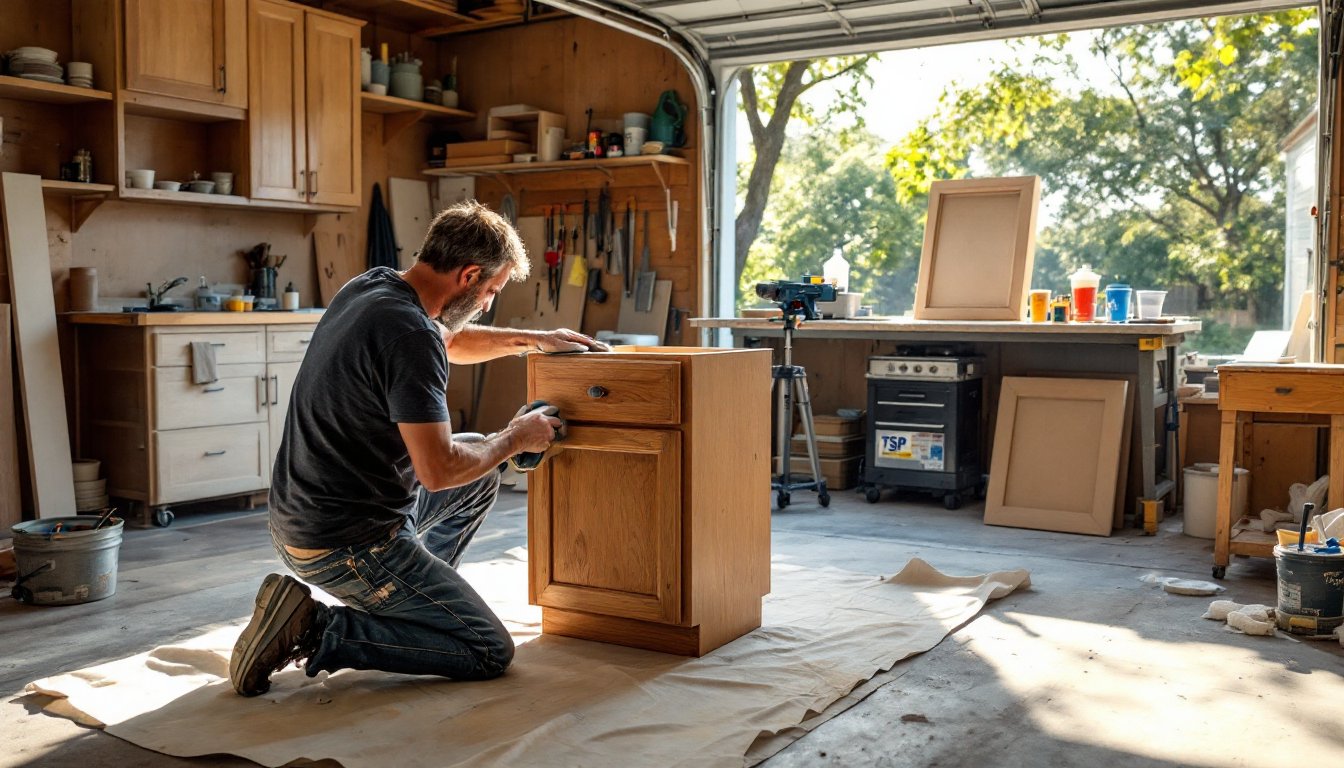
Most used cabinets need at least minor refurbishing. Start by removing all hardware, hinges, knobs, pulls, and drawer slides. Label each piece and its location with painter’s tape to simplify reassembly.
Cleaning comes first. Scrub interiors and exteriors with a degreaser like TSP (trisodium phosphate) or a citrus-based cleaner. Rinse thoroughly and let dry for 24 hours. Grease buildup, especially near cooktops, can interfere with paint or stain adhesion.
For painting, prep is everything. Sand all surfaces with 150-grit sandpaper to degloss and create tooth for primer. Wipe down with a tack cloth, then apply a bonding primer, BIN shellac-based or STIX acrylic primers work on most surfaces, including laminate. Two coats of a durable cabinet-grade paint (acrylic alkyd or waterborne urethane formulas) provide a factory-like finish. Use a foam roller for flat surfaces and a fine-bristle brush for details. Kitchen design resources often feature refinishing tutorials and color trend guides for cabinet makeovers.
Staining or refinishing wood requires stripping old finish with a chemical stripper or careful sanding. Start with 80-grit to remove finish, progress to 120-grit for smoothing, and finish with 220-grit. Apply wood conditioner before staining to prevent blotching, especially on pine or maple. Seal with three coats of polyurethane, sanding lightly between coats.
Replace worn drawer slides with modern soft-close undermount models (Blum or Salice are reliable brands). Side-mount slides are easier to install and adjust, but undermount slides offer cleaner aesthetics and better weight capacity.
Upgrade hinges to soft-close European-style concealed hinges if your door style allows. These adjust in three dimensions (up/down, left/right, in/out) and eliminate slamming.
Installation follows standard cabinet procedures. Locate and mark studs with a stud finder, cabinets must fasten to framing, not just drywall. Start with upper cabinets to avoid interference with base units. Use a laser level or a traditional 4-foot level to establish a reference line at 54 inches above the finished floor (standard height for the bottom of wall cabinets).
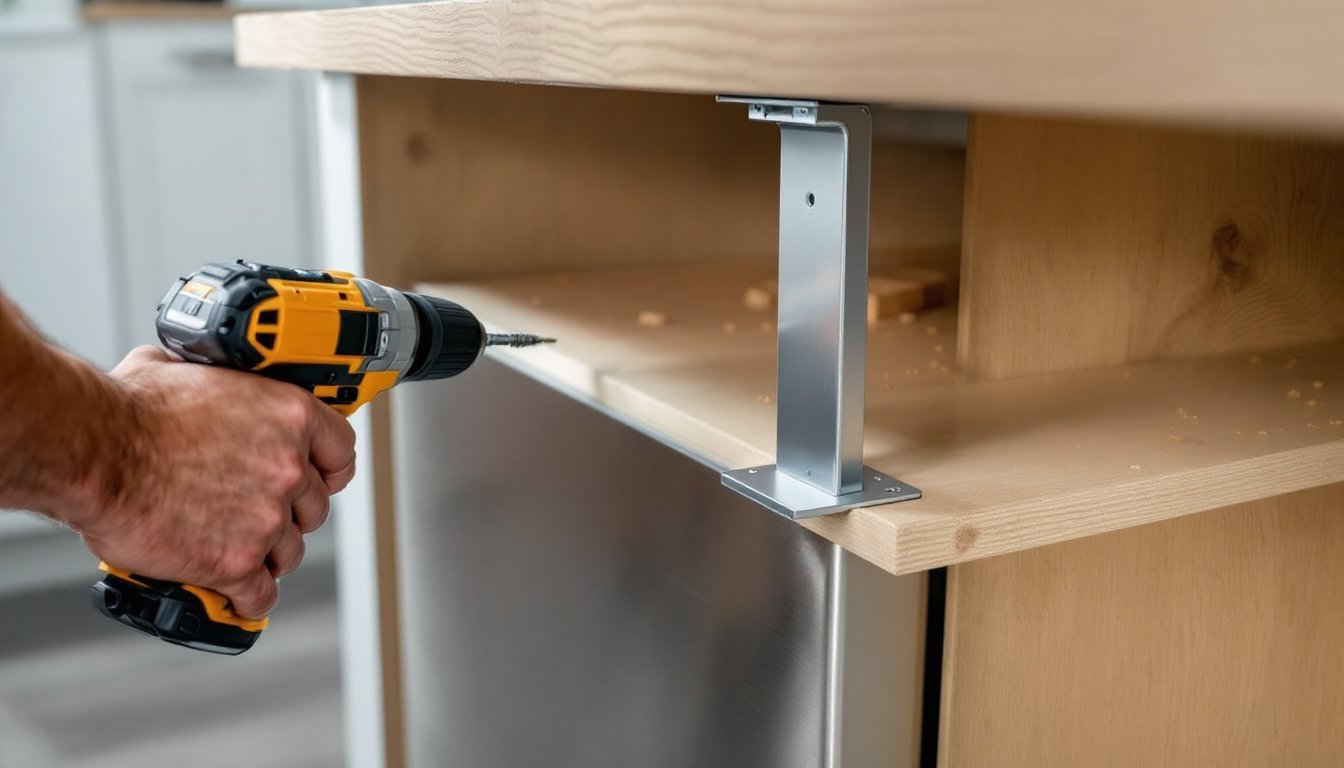
Fasten cabinets to studs with 2.5-inch or 3-inch cabinet screws through the mounting rail or back panel. Shim as needed to keep cabinets plumb and level. Join adjacent cabinets with 1.25-inch screws through face frames or side panels before securing to the wall.
Base cabinets install similarly, but check for level in both directions. An unlevel base throws off countertop installations and door alignment. Shim under cabinets to compensate for uneven floors.
If you’re unsure about plumbing or electrical relocations, hire a licensed professional. Moving sink drains, gas lines, or wiring for undercabinet lighting often requires permits and code compliance.
Safety note: Wear safety glasses and a dust mask during sanding and cutting. Work in a well-ventilated area when using paint, stain, or chemical strippers. Keep a fire extinguisher nearby if working with flammable solvents.
Conclusion
Used kitchen cabinets offer a viable alternative to new construction if you’re willing to inspect carefully, refurbish where needed, and plan around sizing constraints. The savings often justify the extra legwork, and the result can rival new installs when done properly. Measure twice, buy once, and don’t skip the prep work, your kitchen will thank you for it.