Table of Contents
ToggleHard water leaves white film on faucets, reduces soap lather, and shortens the lifespan of appliances. Traditional water softeners fix the problem but require constant salt refills, wastewater discharge, and maintenance. A no-salt water softener, also called a salt-free water conditioner, treats hard water minerals without the drawbacks of ion exchange systems. These systems don’t technically “soften” water, but they prevent scale buildup and protect plumbing without sodium, brine discharge, or complicated upkeep. For homeowners looking to reduce environmental impact and ongoing costs, saltless water softener systems offer a practical middle ground between doing nothing and installing a traditional salt-based unit.
Key Takeaways
- A no salt water softener prevents scale buildup on plumbing and appliances by restructuring hardness minerals into harmless crystals without requiring sodium, brine discharge, or complicated maintenance.
- No-salt water softener systems eliminate recurring salt purchases, wastewater discharge, and drain connections, making them septic-safe and ideal for environmentally conscious homeowners.
- Template Assisted Crystallization (TAC) is the most reliable salt-free water treatment technology, with a 3-5 year media lifespan and minimal installation requirements compared to less consistent electromagnetic descalers.
- A water softener without salt works best for moderate hardness levels (7-15 GPG) where scale prevention is the priority, while traditional softeners remain superior for extreme hardness (20+ GPG) requiring complete mineral removal.
- Most no salt water softener installation can be DIY-friendly for homeowners with basic plumbing skills, costing $200-400 for professional setup and requiring only cartridge replacement every 3-5 years for ongoing maintenance.
What Is a No Salt Water Softener and How Does It Work?
A no-salt water softener doesn’t actually soften water in the chemical sense. Traditional water softeners use ion exchange to remove calcium and magnesium ions, replacing them with sodium. A water softener without salt skips that process entirely.
Instead, these systems condition water by changing the structure of hardness minerals so they don’t form scale. The calcium and magnesium remain in the water, but they’re transformed into microscopic crystals that stay suspended and flow through pipes without sticking.
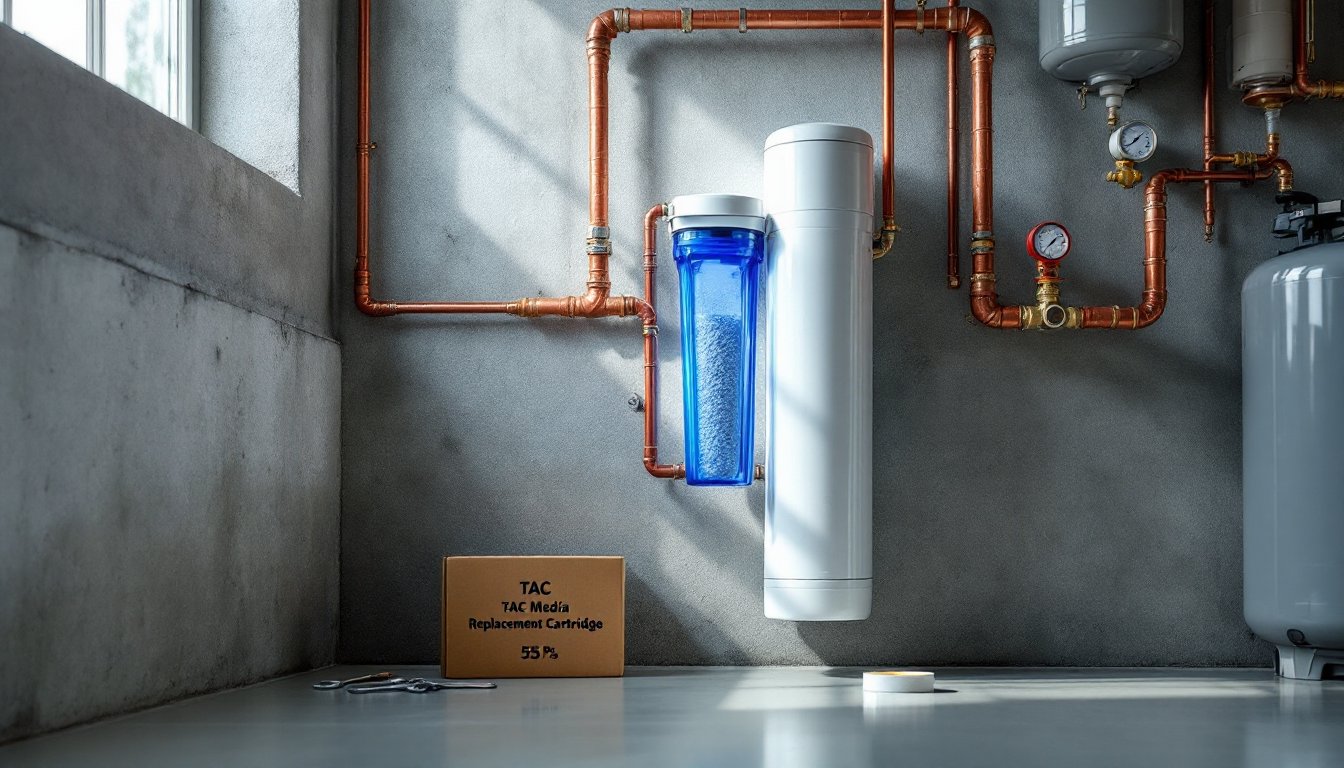
Most whole house salt-free water softener units rely on Template Assisted Crystallization (TAC) or electromagnetic fields. TAC media uses a catalytic surface to convert dissolved minerals into harmless nano-crystals. Electromagnetic and magnetic descalers generate fields that alter mineral behavior, though their effectiveness varies.
Because no salt is added and no minerals are removed, salt-free water softener systems don’t require drain connections, electricity (in most TAC models), or regeneration cycles. They’re installed inline on the main water supply and operate passively. Water flows through the media or field, minerals are restructured, and the treated water continues to every fixture in the house.
One critical distinction: water softener systems without salt won’t reduce water hardness measured in grains per gallon (GPG). A hardness test will still show high mineral content. What changes is how those minerals behave, they won’t cling to surfaces or form the chalky buildup that clogs aerators and coats glass shower doors.
Key Benefits of Choosing a Salt-Free Water Conditioning System
No ongoing salt purchases. Traditional softeners need 40-pound bags of salt every month or two, depending on household size and water hardness. A water softener system salt free eliminates that recurring cost and the hassle of hauling bags from the car to the basement.
Zero wastewater discharge. Ion exchange systems flush brine into the sewer or septic system during regeneration, sometimes 50+ gallons per cycle. Water softener saltless systems produce no backwash, making them septic-safe and better for drought-prone regions.
Healthier drinking water. Salt-based units add sodium to household water. For people on low-sodium diets or homes with well water already high in minerals, avoiding extra sodium is a real advantage. Salt-free systems leave water chemistry unchanged, so it’s safe to drink straight from the tap.
Environmentally friendly. No salt mining, no brine discharge, and no added chloride load on wastewater treatment plants. Many salt-free water softener alternatives rank high for sustainability and low environmental footprint.
Low maintenance. TAC media typically lasts 3 to 5 years before replacement, and many systems have no electrical components to fail. No timers, no valve assemblies, no drainage to troubleshoot. Install it, forget it, and replace the cartridge when the calendar reminds you.
Preserves beneficial minerals. Calcium and magnesium contribute to water taste and provide trace dietary minerals. Some homeowners prefer to keep them in their drinking water rather than stripping them out entirely.
No Salt vs. Traditional Water Softeners: Which Is Right for Your Home?
The choice between a water softener salt vs salt free system depends on water hardness, household priorities, and tolerance for ongoing maintenance.
Use a traditional salt-based softener if:
- Water hardness exceeds 15 GPG and scale is severe
- Soap performance and soft-feeling water matter for laundry and bathing
- Budget allows for salt and wastewater discharge isn’t restricted
- Municipal codes or HOAs permit brine discharge
Choose a no-salt water softener if:
- Hardness is moderate (7-15 GPG) and the goal is scale prevention, not total mineral removal
- Septic system, well water, or environmental concerns rule out brine discharge
- Sodium content in drinking water is a health consideration
- Ongoing maintenance and supply costs aren’t appealing
- Space or electrical access is limited (many non salt water softener systems mount on a wall and need no drain line)
Performance differences: A traditional softener delivers near-zero hardness, producing slick-feeling water and maximum soap lather. A water softener system without salt won’t give you that “soft” feel because minerals remain in solution, but it will drastically reduce scale formation.
For dishes, faucets, and appliances, both systems protect against buildup. For bathing and laundry, traditional softeners have the edge in perceived water quality. If your region has extremely hard water (20+ GPG) and severe scaling, a salt-based system may be the only reliable solution. But for many homes, a water softener no salt option delivers 80% of the benefit with a fraction of the hassle.
Top Types of Salt-Free Water Treatment Systems
Not all water softener systems no salt are created equal. Two main technologies dominate the market, each with different mechanisms and reliability.
Template Assisted Crystallization (TAC) Systems
TAC is the most proven and widely recommended salt-free technology. The system uses polymer beads or granular media coated with nucleation sites. As hard water passes over the media, calcium and magnesium ions bond to the template surface and form microscopic crystals, typically calcium carbonate or magnesium carbonate.
These nano-crystals are stable and won’t adhere to pipes, heat exchangers, or fixtures. They stay suspended in water and rinse away harmlessly. TAC media doesn’t require electricity, backwashing, or chemical regeneration.
Typical specs:
- Flow rates: 10-20 GPM for whole-house models
- Media lifespan: 3-5 years depending on water chemistry and usage
- Pressure drop: Minimal, usually under 5 PSI
- Installation: Inline on main supply line, after the pressure tank (for well systems) or meter (municipal)
TAC systems handle moderate to high hardness well and are backed by independent testing. They’re the go-to choice for building a no-salt water softener from reliable components or buying a pre-assembled unit.
Electromagnetic and Magnetic Descalers
Electromagnetic descalers wrap coils around the incoming water pipe and generate a fluctuating magnetic or electric field. The theory: the field disrupts mineral ions and prevents them from forming scale.
Magnetic descalers use permanent magnets clamped to the outside of the pipe, requiring no power.
Both systems are easy to install, no cutting pipe, just wrap and plug in (for electronic models). But independent testing shows mixed results. Some users report reduced scale: others see no change. Performance depends heavily on flow rate, pipe material, mineral composition, and field strength.
Pros: Low cost, simple retrofit, no maintenance.
Cons: Inconsistent results, limited third-party validation, effectiveness fades over distance from the unit.
These systems work best as supplemental treatments or in situations where traditional plumbing modifications aren’t possible. For whole-house reliability, TAC-based saltless water softener systems have a stronger track record.
Installation and Maintenance: What Homeowners Need to Know
Installing a whole house salt-free water softener is simpler than a traditional ion exchange unit, but it still requires basic plumbing skills and attention to placement.
Installation steps:
- Shut off the main water supply and drain the line. Open a downstream faucet to relieve pressure.
- Choose the install location. Mount the unit after the pressure tank (well systems) or water meter (municipal), before any branch lines. Leave clearance above for future cartridge replacement, typically 12-18 inches.
- Cut the pipe using a tube cutter or hacksaw. Deburr cut edges with a reamer or sandpaper.
- Install the unit using the provided fittings. Most systems use 1-inch NPT threads or push-to-connect (SharkBite-style) fittings. Apply Teflon tape or pipe dope to threaded connections.
- Secure mounting brackets to studs or blocking if the unit is heavy. A full cartridge can weigh 20-30 pounds.
- Restore water pressure slowly and check all connections for leaks. Let water run for 5 minutes to flush any fines from the media.
Maintenance:
- Replace TAC media cartridges every 3-5 years. Mark the install date on the unit with a permanent marker or label.
- Check inlet pressure. TAC systems perform best with inlet pressure between 40-80 PSI. Higher pressure may require a reducer.
- Flush the system annually by opening the bypass valve (if equipped) and running water through a drain valve to clear any accumulated sediment.
- No chemicals, no electricity, no drain line. There’s no regeneration cycle to program or salt tank to monitor.
Permits and codes: Most jurisdictions don’t require permits for non-salt water softener system installations since they don’t discharge wastewater or alter water chemistry. But always check local plumbing codes, especially if you’re modifying the main water line.
Professional vs. DIY: If you’ve replaced a water heater or installed a pressure regulator, you can handle this job. If cutting into the main supply line feels over your head, hire a licensed plumber. Expect to pay $200-400 for professional installation, depending on accessibility and pipe material.
PPE: Wear safety glasses when cutting pipe and gloves when handling fittings and tools. If soldering copper (less common with these systems), add a respirator rated for metal fumes.