
Table of Contents
ToggleMidea might not carry the name recognition of legacy appliance brands, but that’s changing fast. The Chinese manufacturer has carved out serious market share over the past few years by delivering dishwashers that punch above their price point. Homeowners tired of overpaying for the same features are giving Midea a closer look, and many are making the switch. If you’re replacing an aging dishwasher or tackling a kitchen remodel, understanding what Midea brings to the table can save you hundreds of dollars without sacrificing performance or reliability.
Key Takeaways
- Midea dishwashers deliver excellent value at $400–$900, undercutting premium brands like Bosch and KitchenAid by 20–40% while including features such as third racks, sensor wash cycles, and adjustable tines.
- Energy Star-certified Midea dishwashers use approximately 3.5 gallons of water per cycle and consume around 270 kWh annually, costing roughly $35–40 per year in electricity and providing meaningful savings over a 10-year lifespan.
- Mid-range Midea models ($550–$700) offer the best balance of features and affordability for most homeowners, including quieter operation at 45–47 dBA and smart wash options without premium pricing.
- DIY installation is achievable in 2–4 hours with basic tools and plumbing knowledge, though hardwiring electrical connections should be handled by a professional if unfamiliar with household wiring.
- Regular monthly maintenance—including filter cleaning, door seal inspection, and spray arm checks—keeps your Midea dishwasher performing optimally for 8–12 years with minimal repair costs.
Why Midea Dishwashers Are Gaining Popularity Among Homeowners
Price is the obvious draw. Midea dishwashers typically retail between $400 and $900, undercutting comparable Bosch, KitchenAid, and Samsung models by 20-40%. But low cost doesn’t mean bare-bones. Most Midea units include third racks, adjustable tines, delay-start timers, and multiple wash cycles, features that used to be reserved for premium tiers.
Another factor is availability. Midea partners with major retailers like Home Depot and Lowe’s, making parts, warranties, and service more accessible than niche import brands. The company also manufactures dishwashers for other well-known labels under OEM agreements, so the engineering and quality control processes are already proven.
Finally, performance reviews have been solid. Independent testing shows Midea dishwashers handle typical household loads, baked-on casserole dishes, greasy pans, sippy cups, without needing a pre-rinse. Noise levels hover around 45-49 dBA, which is quieter than most conversation and on par with mid-range competitors.
Key Features That Set Midea Dishwashers Apart
Midea’s newer models integrate some smart design choices that address real-world frustrations. The third rack isn’t just a token addition, it’s deep enough to hold full-size serving spoons, spatulas, and even small bowls, freeing up space below for plates and pots.
The adjustable upper rack has multiple height settings, letting you fit oversized items like stockpots or tall wine glasses without Tetris-level maneuvering. Racks use nylon-coated wire that resists rust better than cheaper vinyl-dipped alternatives.
Midea also offers sensor-based wash cycles on select models. These adjust water temperature, spray intensity, and cycle length based on soil level, similar to tech found in dishwashers costing twice as much. It’s not flashy, but it saves water and energy on lightly soiled loads.
Some recent Midea units include a STRAWash cycle, specifically designed to clean reusable straws and narrow water bottle accessories, a feature that gained traction thanks to social media interest in reusable drinkware. It’s niche, but if you’ve got a household full of Hydro Flasks and Stanley tumblers, it’s genuinely useful.
Energy Efficiency and Water Savings
Most Midea dishwashers carry an Energy Star certification, meaning they meet EPA guidelines for water and electricity use. Expect around 3.5 gallons of water per cycle on normal settings, roughly half what you’d use washing by hand.
Energy consumption averages 270 kWh per year based on four cycles per week, translating to about $35-40 annually in electricity costs at national average rates. That’s comparable to Bosch 300 series models but at a lower upfront cost.
If you’re in a region with tiered water pricing or drought restrictions, a Midea dishwasher can deliver meaningful utility savings over a 10-year lifespan. Pair it with a delay-start feature to run cycles during off-peak electricity hours if your utility offers time-of-use rates.
Choosing the Right Midea Dishwasher Model for Your Home
Midea’s lineup breaks into three tiers: budget, mid-range, and feature-rich.
Budget models ($400-$550) offer basic wash cycles, a stainless steel tub, and a top control panel. They lack a third rack and run slightly louder (49 dBA). Good fit for rentals, basement kitchens, or anyone prioritizing cost over bells and whistles.
Mid-range models ($550-$700) add the third rack, adjustable upper rack, sensor wash, and quieter operation (45-47 dBA). This is the sweet spot for most homeowners, enough features to handle daily use without overpaying.
Premium models ($700-$900) include Wi-Fi connectivity, specialized cycles (like STRAWash), zone wash options, and sleeker stainless exteriors. Consider these if you’re renovating a modern kitchen or want smart home integration.
Measure your existing dishwasher cavity before buying. Standard built-in models are 24 inches wide, but Midea also makes 18-inch compact units for tight galley kitchens. Check the height too, most units need 34-35 inches of clearance, but some countertops sit lower.
If your home has hard water, look for models with a stainless steel tub and rinse aid dispenser. Plastic tubs retain odors and stains over time. Rinse aid helps prevent mineral spotting on glassware, which matters if your water hardness exceeds 7 grains per gallon.
Installation Tips for DIY Enthusiasts
Replacing a dishwasher is a manageable DIY project if you’re comfortable working with basic plumbing and electrical connections. Plan on 2-4 hours for a straightforward swap.
Tools you’ll need:
- Adjustable wrench
- Screwdriver set (Phillips and flathead)
- Channel lock pliers
- Voltage tester (non-contact)
- Torpedo level
- Towels and a shallow pan (for water spills)
Step-by-step process:
- Shut off power at the circuit breaker and verify with a voltage tester. Turn off the water supply valve under the sink.
- Disconnect the old unit. Remove the screws securing it to the countertop, then disconnect the water supply line (compression fitting or braided hose), drain hose, and electrical junction box. Have towels ready, residual water will drain out.
- Check rough-in connections. Most dishwashers use a 3/8-inch compression fitting for water supply, a 7/8-inch drain hose, and hardwired 120V electrical (some plug into an outlet). If switching brands, confirm the connections match. Midea models use standard configurations.
- Level the new dishwasher. Adjust the front leveling legs before sliding it into the cavity. A dishwasher that’s not level will leak or fail to drain properly. Use a torpedo level on the top edge, front-to-back and side-to-side.
- Reconnect supply lines. Hand-tighten the water supply fitting, then snug it a quarter-turn with a wrench, over-tightening can crack the valve. Attach the drain hose to the garbage disposal or sink tailpiece with a hose clamp. If your local code requires it, install a high loop or air gap to prevent backflow.
- Wire the electrical. Match black to black, white to white, green (or bare copper) to ground. Use wire nuts and electrical tape. If you’re unfamiliar with household wiring, hire an electrician, it’s a $100-150 call-out, which is cheaper than fixing fire damage.
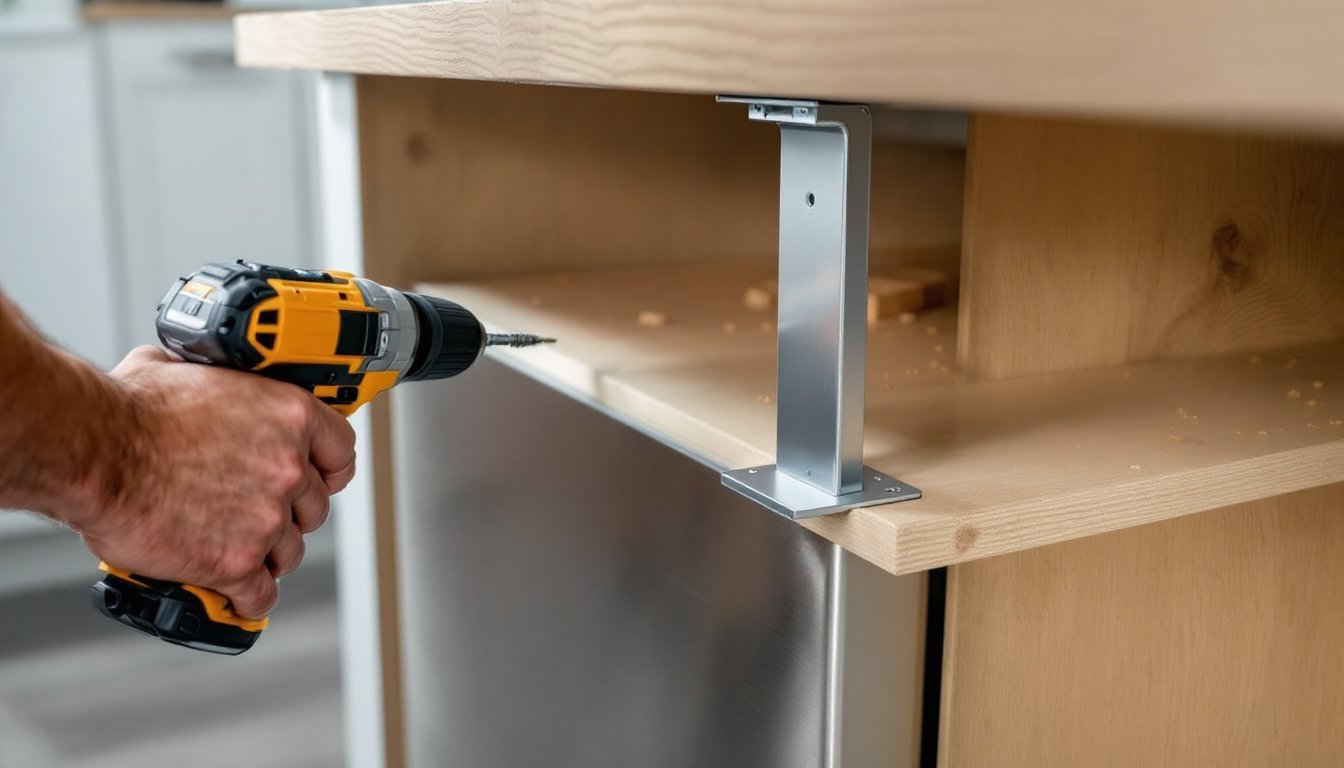
- Secure and test. Screw the mounting brackets to the underside of the countertop. Turn on the water and power, then run a short cycle to check for leaks.
Permit requirements: Most jurisdictions don’t require a permit for a like-for-like dishwasher replacement. If you’re adding a new dishwasher or moving plumbing lines, check with your local building department. Electrical and plumbing permits typically run $50-150.
If your home still uses copper water supply lines instead of braided stainless, consider upgrading. Braided lines are flexible, easier to connect, and less prone to kinking. They cost about $15 at any hardware store.
Maintenance and Troubleshooting Your Midea Dishwasher
Regular upkeep keeps a Midea dishwasher running smoothly for 8-12 years.
Monthly tasks:
- Clean the filter. It’s located at the bottom of the tub. Twist counterclockwise to remove, rinse under hot water, scrub with a soft brush, and reinstall. A clogged filter is the #1 cause of poor wash performance.
- Wipe door seals. Food particles and grease collect in the rubber gasket. A damp cloth and a bit of dish soap prevent mold and odors.
- Inspect spray arms. Remove them (they usually pull straight up) and clear any debris from the spray holes using a toothpick or wire.
Quarterly tasks:
- Run a cleaning cycle. Use a commercial dishwasher cleaner (Affresh, Finish) or a cup of white vinegar placed upright on the top rack during an empty hot cycle. This removes mineral buildup and grease.
Common issues and fixes:
- Dishes aren’t drying: Midea dishwashers use condensation drying (no heating element). Load items so water can drain off. Refill the rinse aid dispenser, it’s not optional. If you’ve got hard water, increase the rinse aid dosage setting.
- Unit won’t drain: Check the drain hose for kinks or clogs. Remove the filter and clear the sump area. If the drain pump hums but doesn’t drain, it may be jammed, remove the pump cover (consult your manual) and clear debris.
- Error codes: Midea uses alphanumeric codes (E1, E4, etc.). E1 usually indicates a water fill issue, check the supply valve and inlet screen. E4 often points to a drain problem. Your owner’s manual has a full list. Many appliance troubleshooting resources also provide model-specific error code guides.
- Noisy operation: A grinding noise during the wash cycle often means something (a bottle cap, twist tie, bone fragment) is caught in the pump or spray arm. Stop the cycle, remove the lower rack, and inspect.
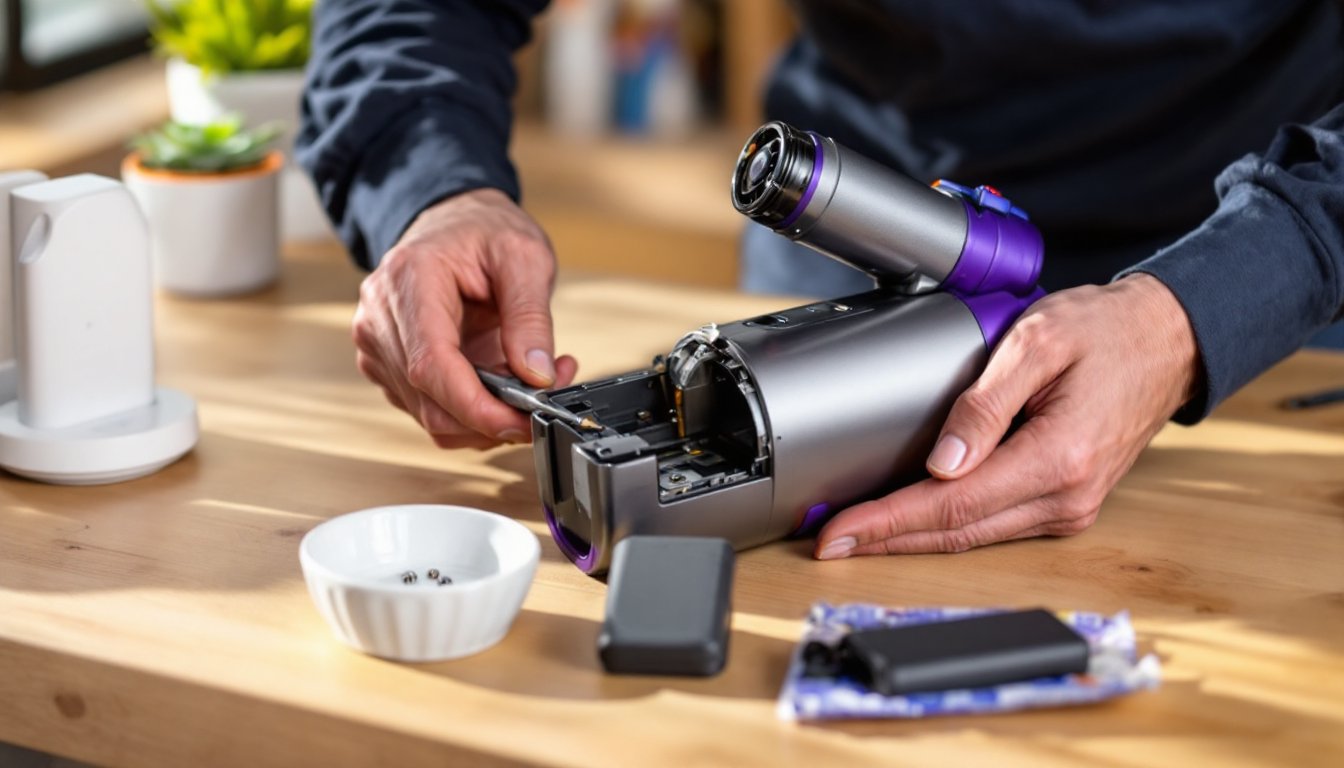
Replacement parts are available through Midea’s parts portal, Amazon, or appliance parts retailers like RepairClinic. Filters, spray arms, and door latches are the most commonly replaced items and cost $15-50.
How Midea Dishwashers Compare to Other Brands
Midea sits in a value-focused tier alongside GE and Frigidaire but often undercuts them by $100-200 on comparable models.
Midea vs. Bosch: Bosch dishwashers (especially the 300 and 500 series) are quieter (44 dBA or lower) and have better drying performance thanks to heated dry cycles. But they start around $700 and climb quickly. Midea offers 80% of the performance for 50-60% of the cost. If budget is tight, Midea wins. If noise is a priority (open-concept living, for example), Bosch edges ahead.
Midea vs. Whirlpool/KitchenAid: Whirlpool models in the $600-800 range are solid workhorses but lack some of the features Midea includes as standard (third rack, sensor wash). KitchenAid’s entry-level models overlap with Midea on price but don’t offer the same feature density. Midea’s newer sensor technology and wash cycles are more advanced in this price bracket.
Midea vs. Samsung/LG: Samsung and LG focus heavily on smart features and sleek design. Their dishwashers look great in a modern kitchen and integrate with home automation systems, but reliability can be hit-or-miss. Midea skips the flashy tech and focuses on core performance, which appeals to homeowners who’d rather have a machine that just works.
Service and warranty: Midea offers a 1-year full warranty plus extended coverage on specific parts (typically 2-5 years on the tub and motor). That’s standard across the industry. Service network isn’t as robust as Whirlpool or GE, but because Midea units are sold through major retailers, parts availability is decent. Third-party appliance techs can handle most repairs.
If you value design aesthetics and cutting-edge features, Midea might feel utilitarian. But if you want a dishwasher that cleans effectively, runs quietly enough, and doesn’t drain your remodel budget, it’s one of the better values available in 2026. Many users on home appliance forums have noted Midea’s reliability and performance relative to cost.