Table of Contents
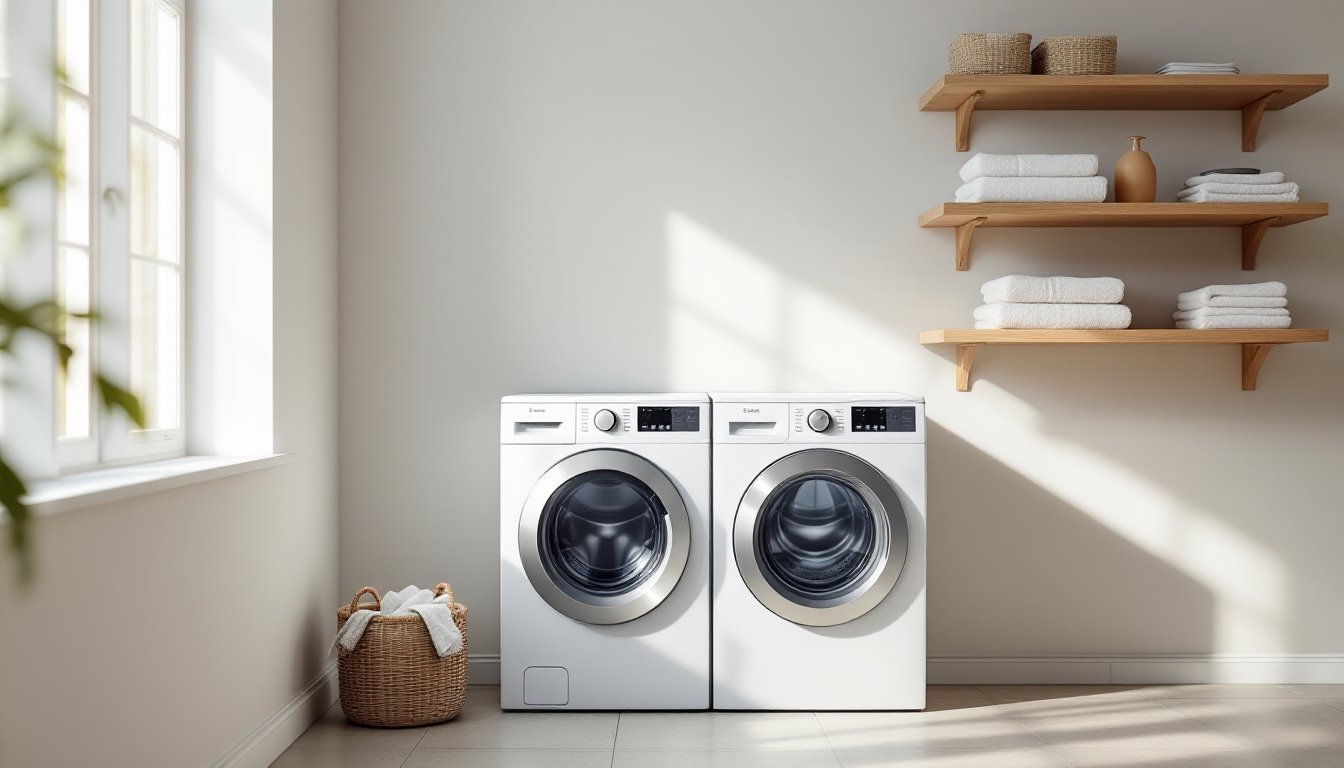
ToggleAnyone who’s ever bent over to transfer a load of wet laundry from a front-load washer knows the strain. Your back aches, you’re crouched at an awkward angle, and you’re fishing around in the drum like you’re mining for socks. Washer and dryer pedestals solve that problem while adding storage to one of the most cluttered spaces in the house. But not all pedestals are created equal, some are flimsy, some don’t fit standard models, and some cost more than they’re worth. This guide breaks down everything DIYers and homeowners need to know: what pedestals actually are, why they’re worth considering, the types available, how to pick the right one, and whether you should build your own or buy off the shelf.
Key Takeaways
- Washer and dryer pedestals raise appliances 12 to 16 inches off the floor, reducing back strain and bringing drum openings to a comfortable 30 to 34 inches—closer to countertop height for easier loading and unloading.
- Most pedestals include a 4 to 6-inch deep drawer for storing detergent, dryer sheets, stain removers, and laundry essentials, reclaiming valuable storage space in cramped laundry rooms.
- OEM (brand-specific) pedestals cost $150 to $300 and offer guaranteed fitment and warranty coverage, while universal stands run $100 to $200 but require careful verification of weight capacity and appliance compatibility.
- DIY washer and dryer platforms cost just $40 to $80 in materials and allow customization for non-standard appliances or special features like pull-out hampers and integrated shelving.
- Metal pedestals with powder-coated steel finishes are more durable and moisture-resistant than particleboard or MDF, making them ideal for humid basement laundry rooms.
- Choose a factory pedestal for plug-and-play convenience and resale value, or build your own if you need custom dimensions, specialized storage, or have appliances that don’t fit universal options.
What Is a Washer and Dryer Pedestal?
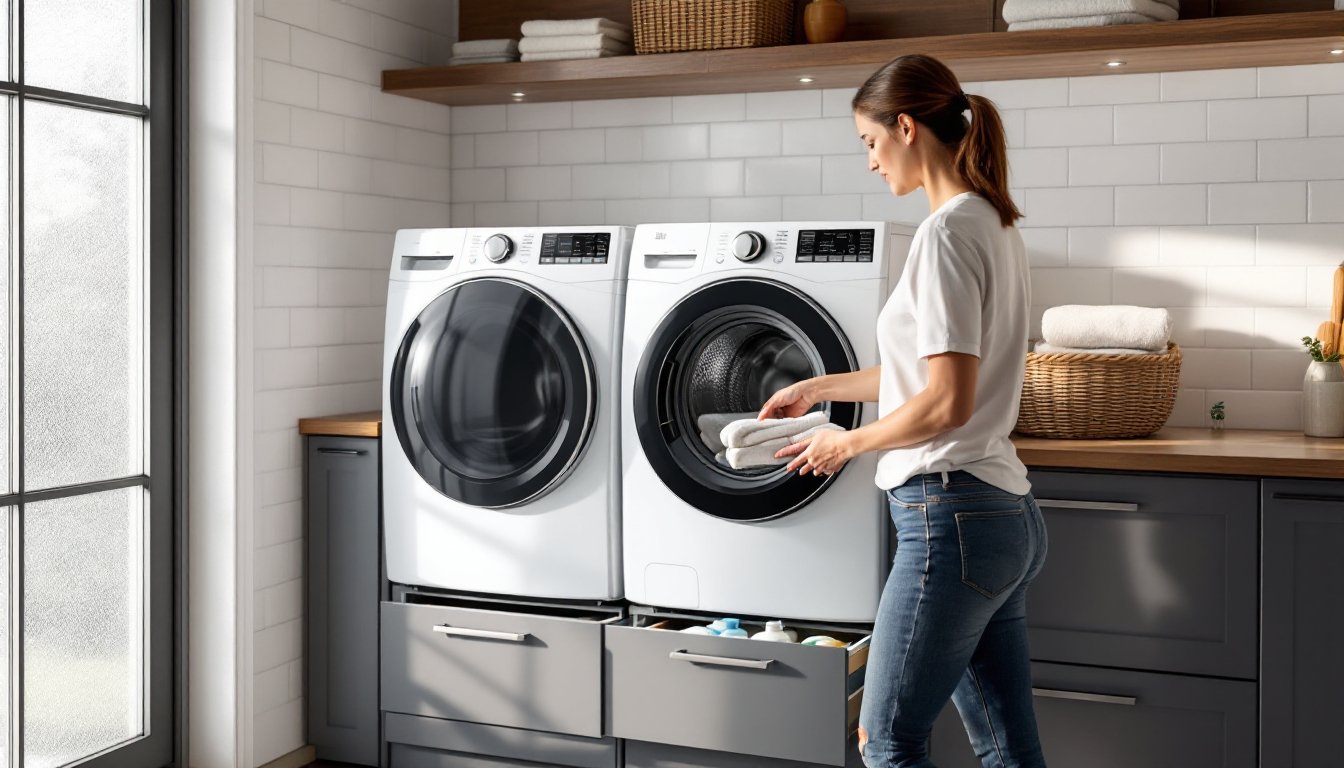
A washer and dryer pedestal is a platform that raises your appliances 12 to 16 inches off the floor. Most models are metal or heavy-duty polymer, designed to support the weight and vibration of modern front-load washers and dryers, typically 200 to 300 pounds when loaded.
Washer dryer pedestals come in two main configurations: single units that fit one appliance, or paired stands sold as a set. The majority include a pull-out drawer for detergent, dryer sheets, stain removers, and other laundry essentials.
Manufacturers like LG, Samsung, Whirlpool, and GE sell brand-specific pedestals that match their appliance lines in color and finish. Universal washer and dryer stands are also available, though fitment can be trickier, more on that later.
These platforms aren’t just cosmetic. They’re engineered to handle dynamic loads and lateral movement during spin cycles. Cheaper washer dryer stand options may buckle or shift over time, especially with high-efficiency models that spin at 1,200+ RPM.
Why You Should Consider Adding a Pedestal to Your Laundry Room
Ergonomic Benefits and Reduced Strain
Front-load washers sit low, drum openings are typically 15 to 18 inches from the floor. That forces you into a deep squat or bend every time you load or unload. Over weeks and months, that repetitive motion stresses the lower back, knees, and hips.
Raising the washer with a pedestal brings the drum opening to around 30 to 34 inches, closer to countertop height. You can stand upright, pivot slightly, and transfer clothes without contorting your spine. For anyone with mobility issues, arthritis, or chronic back pain, this isn’t a luxury, it’s a practical necessity.
Dryers benefit too. Reaching into the back of a dryer drum is easier when you’re not crawling on the floor. The difference is especially noticeable if you’re doing multiple loads a day or dealing with bulky items like comforters.
Extra Storage Space for Laundry Essentials
Most washer and dryer pedestals include a drawer that’s 4 to 6 inches deep and wide enough to span the appliance width (usually 27 to 29 inches). That’s enough room for:
- Detergent pods or liquid (including bulk refill containers)
- Fabric softener and dryer sheets
- Stain removers, bleach, and specialty cleaners
- Lint rollers, mesh bags, and dryer balls
In small homes or apartments where cabinet space is limited, washer and dryer drawers reclaim otherwise dead vertical space. Some models feature dual drawers or compartments with dividers for better organization.
If you’re building a DIY washer and dryer platform, you can customize the drawer depth and layout to fit your specific needs, think pull-out bins, pegboard inserts, or tilt-out hampers.
Types of Washer and Dryer Pedestals Available
OEM (Original Equipment Manufacturer) Pedestals
These are made by the same brand as your washer and dryer. They’re color-matched, pre-drilled for mounting, and engineered to handle the exact load and vibration profile of your model. Expect to pay $150 to $300 per pedestal. Installation is straightforward, most use four corner bolts and include anti-slip pads. The downside: you’re locked into one brand, and they’re pricey.
Universal Washer Dryer Stands
These fit multiple brands and models, usually via adjustable brackets or a flat top surface. They’re often cheaper, $100 to $200 per unit, but fitment isn’t guaranteed. Check the weight capacity (look for 300+ pounds if you have a large-capacity washer) and verify the footprint matches your appliance dimensions. Some universal stands skip the drawer entirely and function as a simple riser.
Washer and Dryer Platform (DIY or Pre-Fab)
A platform is a single, continuous base that holds both appliances. Pre-fab versions are typically wood or metal, with or without drawers. DIY builders often use 2×4 framing with 3/4-inch plywood or MDF on top, sometimes adding casters for mobility (though this isn’t recommended for front-loaders due to vibration). Platforms can be stained, painted, or faced with panel to match cabinetry. Many home improvement tool reviews recommend building a platform if you’re already comfortable with a miter saw and drill.
Drawer Pedestals vs. Open Shelves
Most washer dryer pedestals feature closed drawers, but some newer designs use open cubbies or slide-out baskets. Open storage is easier to access but collects dust and looks cluttered if not maintained. Drawer-style washer and dryer drawers keep supplies hidden and the space looking clean.
How to Choose the Right Pedestal for Your Appliances
Match the Brand and Model
If you own a Samsung WF45 washer, buy the Samsung pedestal designed for that series. OEM pedestals come with pre-drilled holes that align with the appliance’s feet and include the correct hardware. Mixing brands can work, but you’ll likely need to drill new mounting holes or use aftermarket brackets, adding time and risk of voiding your warranty.
Check Weight Capacity and Stability
Front-load washers can weigh 200+ pounds empty and hit 300+ pounds during a full spin cycle. Verify the pedestal’s load rating. Universal models should list a static and dynamic capacity. If it doesn’t specify, skip it. Also confirm the pedestal base is wider than the appliance footprint or has anti-tip brackets. Testing by appliance safety organizations shows that narrow pedestals increase tip-over risk, especially on uneven floors.
Measure Your Space
Adding 12 to 16 inches of height affects overhead clearance. Measure from floor to ceiling, then add the appliance height plus the pedestal height. If you’re tucking units under a countertop or in a closet, confirm there’s enough room for lids to open (top-load) or doors to swing (front-load). Also check door swing radius, raising the washer can interfere with adjacent cabinetry or walls.
Drawer vs. No Drawer
If storage isn’t a priority, you can save money with a simple riser platform. But if you’re already spending $250+ on a pedestal, the drawer feature usually adds only $20 to $50 in cost and significantly boosts utility.
Material and Finish
Metal pedestals (usually powder-coated steel) are the most durable and resist moisture better than particleboard or plastic. If you’re in a basement with humidity issues, avoid MDF-core pedestals, they swell and degrade over time. Color-match your appliances if aesthetics matter, or go with a neutral white or graphite finish that works with most laundry room palettes.
DIY vs. Store-Bought: Which Option Is Right for You?
When to Buy a Factory Pedestal
If you want plug-and-play installation, warranty coverage, and a color match, buy the OEM pedestal. You’ll spend more upfront but save hours of cutting, measuring, and troubleshooting. Factory pedestals also hold resale value, if you sell your home, matching pedestals signal a well-maintained laundry setup.
Installation is usually a 30-minute, two-person job: tip the washer on its back (use a moving blanket to protect the finish), bolt the pedestal to the appliance feet, and set it upright. No special tools beyond a socket wrench or drill with a hex bit.
When to Build Your Own Washer Dryer Platform
DIY makes sense if you:
- Want custom dimensions (taller, wider, or deeper than standard)
- Need built-in features like pull-out hampers, tilt-out bins, or integrated shelving
- Already own the tools (circular saw, drill, level, clamps)
- Have non-standard appliances that don’t fit universal pedestals
A basic DIY platform using 2×4 studs, 3/4-inch plywood, and construction adhesive costs $40 to $80 in materials. You can add a drawer using full-extension slides ($20 to $40 per pair) and a drawer box made from 1×6 pine or poplar. Finish with paint or stain to match your space.
Safety note: DIY platforms must be structurally sound. Use 2×4 framing on 16-inch centers, anchor to wall studs with L-brackets if possible, and ensure the top surface is dead-level. An unlevel platform causes washers to walk during spin cycles, damaging hoses and flooring. For step-by-step builds, many homeowner maintenance guides offer free project plans.
Hybrid Approach: Universal Pedestal + Modifications
Some DIYers buy a basic universal pedestal and customize it, adding a second drawer, swapping out the drawer front for a panel-matched design, or reinforcing the frame with additional cross-bracing. This balances cost, time, and quality.
Permits and Code
Pedestals and platforms are considered furniture, not structural elements, so permits aren’t required. But, if you’re anchoring to studs or modifying cabinetry, verify you’re not drilling into electrical or plumbing runs. Always wear safety glasses when cutting and drilling, and use a dust mask if working with MDF or treated lumber.