Table of Contents
ToggleIndoor air quality doesn’t get much attention until someone starts sneezing, or you notice dust settling on everything two days after cleaning. But the air inside most homes contains everything from pet dander and pollen to VOCs off-gassing from furniture and finishes. That’s where a Jasper air purifier (often stylized as Jaspr) comes in, a medical-grade filtration system originally designed for healthcare environments, now available for residential use. Unlike standard HEPA units, Jasper’s system targets particles, gases, and even pathogens, making it a serious option for homeowners dealing with allergies, asthma, or post-renovation air quality issues. This guide walks through what sets Jasper apart, how the technology works, and how to choose, install, and maintain one in your home.
Key Takeaways
- A Jasper air purifier combines HEPA filtration with photocatalytic oxidation (PCO) to remove both particles and volatile organic compounds (VOCs), outperforming standard HEPA-only units in handling allergens, odors, and chemical off-gassing.
- Jasper air purifiers operate at whisper-quiet levels (30-40 dB on low speed) and feature a self-cleaning PCO reactor that only requires HEPA pre-filter replacement every 12-18 months, reducing long-term maintenance compared to traditional purifiers.
- Proper placement near the center of a room with unobstructed airflow and continuous operation at low or medium speed ensures the Jasper air purifier achieves 2-5 air changes per hour, delivering maximum effectiveness for allergy relief and air quality improvement.
- At $800-$1,500 upfront, a Jasper air purifier is ideal for homeowners dealing with post-renovation fumes, pet odors, and severe allergies, with replacement costs staying minimal ($70-$120 annually for filters and UV lamps).
- The UV lamp in a Jasper air purifier has a 20,000+ hour lifespan (2-3 years continuous use) and alerts users when replacement is needed, making maintenance straightforward with plug-in cartridge design requiring no special tools.
What Makes Jasper Air Purifiers Stand Out for Home Use
Jasper air purifiers were developed for hospitals and clinical settings, which means they’re engineered to handle more than just dust and pet hair. The core difference is their two-stage filtration approach: HEPA filtration paired with photocatalytic oxidation (PCO). Most consumer air purifiers stop at HEPA, which captures particles down to 0.3 microns, effective for allergens and some bacteria. Jasper adds a PCO stage that breaks down volatile organic compounds (VOCs), odors, and certain airborne pathogens at the molecular level.
For homeowners, this matters in a few scenarios: post-construction or remodeling projects (where VOCs from paint, adhesives, and new flooring linger), homes with smokers or pets, and spaces where someone has a compromised immune system or severe allergies. Standard HEPA filters can’t neutralize formaldehyde or benzene: they just trap particles. Jasper’s PCO reactor oxidizes these gases into harmless byproducts.
Another standout feature is quiet operation. Many high-CFM air purifiers sound like a box fan on high. Jasper units run at 30-40 dB on lower speeds, comparable to a whisper or light rainfall. That makes them practical for bedrooms, home offices, and nurseries where noise disrupts sleep or concentration.
Finally, Jasper’s filterless PCO reactor doesn’t require replacement, only the HEPA pre-filter needs swapping. That cuts long-term maintenance costs and waste, though the upfront investment is higher than mainstream brands. For DIYers who’ve just finished refinishing hardwood floors or painting a bedroom, a Jasper unit can speed up off-gassing and improve air quality faster than just opening windows.
Key Features and Technology Behind Jasper Air Purifiers
Understanding the tech stack helps homeowners decide if Jasper fits their needs. The unit combines HEPA filtration with photocatalytic oxidation (PCO), two complementary processes. The HEPA stage captures airborne particles: pollen, mold spores, dust mite waste, pet dander, and fine particulate matter (PM2.5 and PM10). It’s rated to remove 99.97% of particles 0.3 microns or larger, which covers most allergens and some bacteria.
The second stage is where Jasper diverges from standard purifiers. The PCO reactor uses UV light and a catalyst (typically titanium dioxide) to break down organic molecules. When air passes through, VOCs, odors, and certain microorganisms are oxidized into carbon dioxide and water vapor. This process is continuous and doesn’t produce ozone as a byproduct, a key safety feature, since ozone generators (sometimes marketed as air purifiers) can irritate lungs and damage materials.
Jasper’s airflow design is optimized for whole-room circulation. Units are rated by CADR (Clean Air Delivery Rate), measured in cubic feet per minute. The residential Jasper models typically cover 500-1,000 square feet, depending on ceiling height and layout. For a 12×15-foot bedroom with 8-foot ceilings (1,440 cubic feet), a unit rated for 600 sq ft will cycle the air roughly 3-4 times per hour, which is adequate for allergy relief.
Filtration System and Performance Capabilities
The HEPA filter in Jasper units is a pleated, high-density media rated H13 or H14 (medical-grade). It’s the first line of defense, trapping particulates before they reach the PCO stage. Expect to replace this filter every 12-18 months under typical residential use, more often in homes with multiple pets, heavy cooking, or ongoing construction.
The PCO reactor cell is permanent and self-cleaning. UV lamps inside the unit have a rated lifespan of 20,000+ hours (roughly 2-3 years of continuous operation). When the lamp reaches end-of-life, an indicator light alerts the user. Replacement is straightforward: the lamp module slides out after removing a rear panel. No special tools required, though you’ll want to disconnect power first.
Performance benchmarks from independent air purifier testing show that Jasper units excel at reducing both particulate matter and gaseous pollutants, a dual capability most consumer models can’t match. In real-world use, homeowners report noticeable reductions in pet odors, paint fumes, and allergy symptoms within 24-48 hours of continuous operation.
Choosing the Right Jasper Model for Your Home
Jasper (branded as Jaspr in some markets) currently offers a handful of models tailored to different room sizes and use cases. The primary residential unit is the Jaspr Pro, designed for spaces up to 1,000 square feet. For smaller bedrooms or home offices (under 400 sq ft), the compact model suffices. Larger open-concept areas or finished basements may need two units or a commercial-grade model.
Start by calculating your room’s cubic footage: length × width × ceiling height. For example, a 20×20-foot living room with 9-foot ceilings is 3,600 cubic feet. Divide that by the unit’s CADR to estimate air changes per hour. Aim for at least 2-3 ACH (air changes per hour) for general air quality: bump it to 4-5 ACH if someone has asthma or severe allergies.
Consider placement constraints. Jasper units are roughly the size of a small nightstand (about 24 inches tall, 12 inches wide). They need clearance on all sides for airflow, minimum 12 inches from walls and furniture. If you’re dealing with a narrow bedroom or crowded home office, measure available floor space before ordering.
Noise tolerance matters, too. On the lowest fan speed, Jasper units run at 30-35 dB, quieter than a refrigerator. High speed pushes 50-55 dB, comparable to a normal conversation. If you’re a light sleeper, stick to low or medium speeds overnight. For workshops or basements where you’re running power tools, noise is a non-issue.
Finally, factor in upfront cost vs. long-term savings. Jasper units range from $800 to $1,500, depending on the model and where you buy. Replacement HEPA filters run $70-$100, and UV lamps cost around $120. Compare that to HEPA-only units that need $50-$80 filters every 6 months but can’t touch VOCs. For homes undergoing frequent DIY projects, painting, refinishing, installing new cabinetry, the ability to clear chemical off-gassing justifies the premium.
Installation and Placement Tips for Maximum Effectiveness
Installation is plug-and-play: unbox, remove protective film from the filters, plug into a standard 120V outlet, and power on. No hardwiring, no HVAC integration required. That said, placement makes or breaks performance.
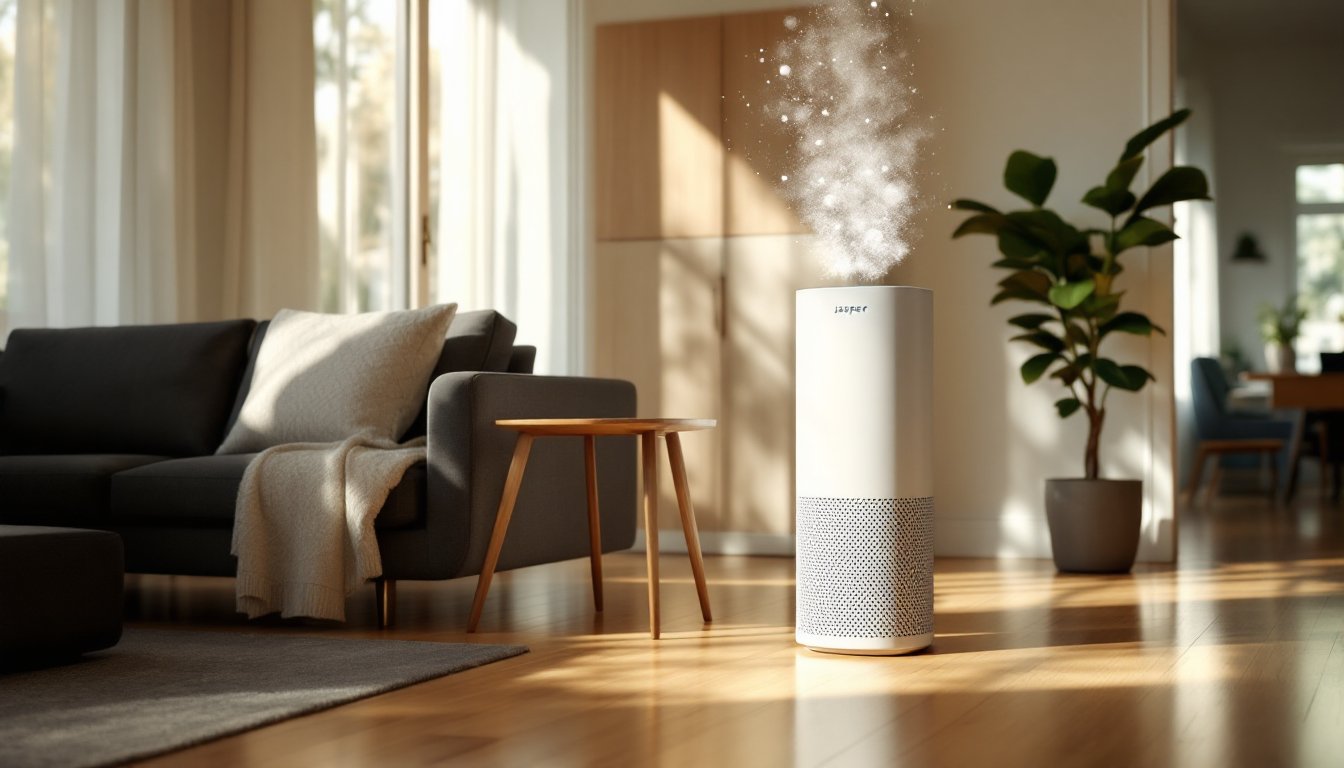
Central location beats corner placement. Air purifiers work by drawing in room air, filtering it, and expelling clean air. If the unit sits in a corner behind furniture, it only treats a fraction of the room. Ideally, place it near the center of the space, or at least along an open wall with clearance on three sides. In a bedroom, the foot of the bed works well: in a living room, next to a sofa or between seating areas.
Avoid placing units directly next to walls or inside closets. The intake vents need unobstructed airflow. A common mistake is shoving the purifier under a desk or behind a curtain, airflow drops by half, and filtration efficiency plummets.
Elevate the unit if possible. Setting it on a low stool or plant stand (6-12 inches off the floor) improves circulation, since heavier particles and dust settle near the floor. This isn’t mandatory, but it helps in rooms with wall-to-wall carpet or heavy pet traffic.
Run the unit continuously, at least on low speed. Air purifiers don’t “fix” air quality in one pass: they gradually reduce pollutant levels over hours. Cycling the unit on and off lets contaminants build back up. For best results, set it to auto mode (if available) or run it 24/7 on low. Power draw is minimal, around 30-60 watts on low, comparable to a laptop charger.
For multi-room coverage, one unit per enclosed space is the rule. Air purifiers can’t pull air through closed doors or around corners. If you’re treating a master bedroom and a home office, you’ll need two units. Open-concept layouts (kitchen-living-dining combo) can often get by with a single high-CADR model placed centrally.
Safety note: Keep the unit away from water sources (kitchens sinks, bathrooms) and avoid blocking vents with curtains, paper, or fabric. The UV lamps inside generate heat: proper ventilation prevents overheating.
Maintenance Requirements and Filter Replacement Guide
Routine maintenance on a Jasper air purifier is minimal, but skipping it shortens filter life and reduces performance. Here’s the checklist:
Monthly: Vacuum or wipe the exterior intake grills. Dust buildup here restricts airflow and makes the fan work harder. Use a soft brush attachment on a shop vac or a microfiber cloth. Don’t use compressed air inside the unit, it can damage the HEPA media.
Every 12-18 months: Replace the HEPA pre-filter. The unit will display a filter-change indicator when it’s time, based on runtime hours and airflow resistance. To swap filters, power off and unplug the unit. Remove the rear or side panel (typically held by clips or a quarter-turn latch). Slide out the old filter, note the airflow direction arrow, and insert the new one the same way. Reinstall the panel and reset the indicator via the control panel (consult the user manual for the exact button sequence).
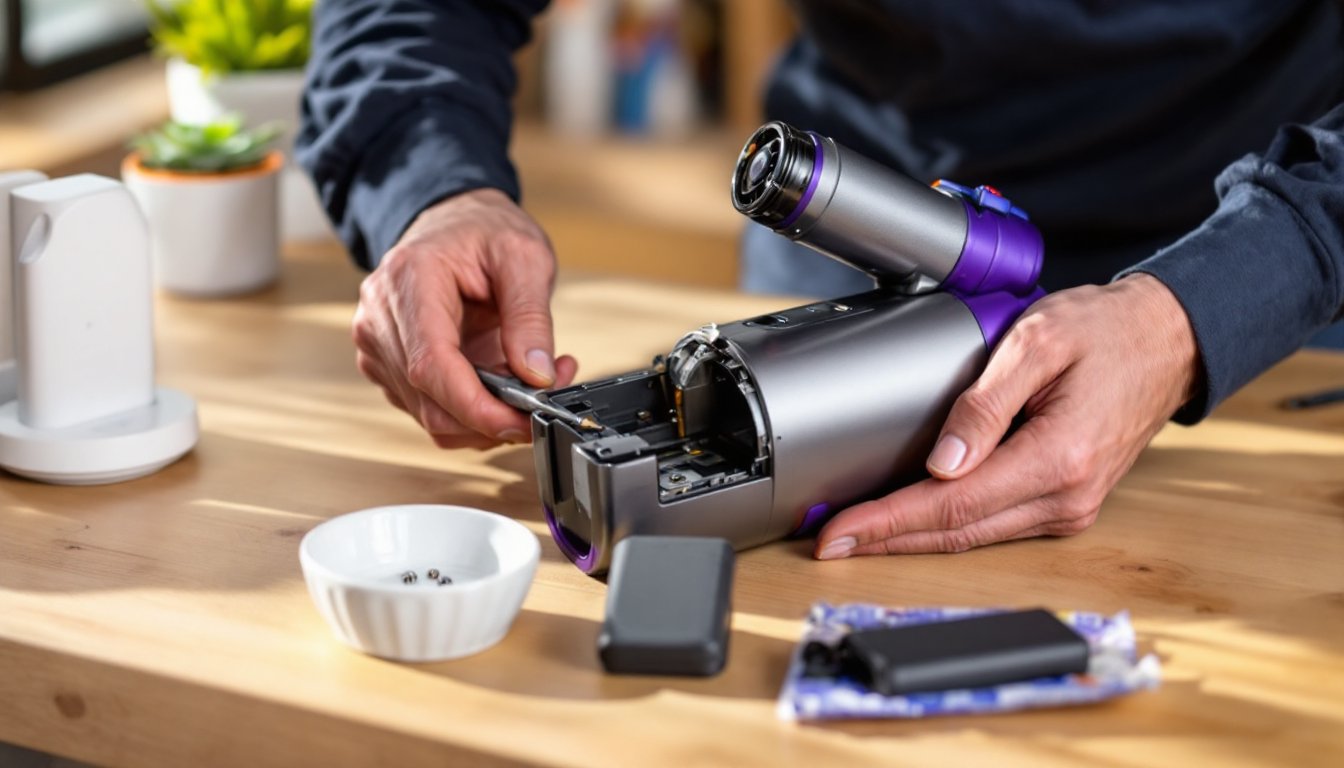
Every 2-3 years: Replace the UV lamp in the PCO reactor. The unit will alert you when lamp output drops below effective levels. The lamp module is a plug-in cartridge, no soldering or wiring. Pull the old lamp straight out, insert the new one until it clicks, and close the access panel. Always handle UV lamps by the base, not the glass tube: skin oils can create hot spots and shorten lamp life.
Filter disposal: HEPA filters are not recyclable in most curbside programs due to captured contaminants. Seal the used filter in a plastic bag and dispose of it with household trash. Some municipalities accept them at hazardous waste drop-offs: check local guidelines.
Troubleshooting common issues: If airflow feels weak, check for obstructions around the intake and exhaust. If the unit won’t power on, verify the outlet has power (test with a lamp or phone charger) and check the internal fuse (if applicable). Persistent odors after filter replacement can mean the PCO lamp needs changing, or there’s a hidden source (mold in ductwork, pet accidents under furniture) the purifier can’t address.
Many smart home enthusiasts integrate Jasper units with timers or smart plugs reviewed by tech experts, allowing remote on/off control via smartphone. This is optional but handy if you want to run the unit on high during the day and dial it back at night.
Conclusion
A Jasper air purifier offers medical-grade filtration that goes beyond standard HEPA units, making it a solid choice for homeowners tackling post-renovation air quality, managing allergies, or living with pets. The combination of HEPA and PCO technology addresses both particles and gases, something most consumer purifiers can’t do. Proper placement, continuous operation, and timely filter changes ensure the unit performs as designed. For more perspectives on air purification and smart home devices, compare specs and user reviews before committing. If your home improvement projects leave lingering fumes or you’re serious about indoor air quality, Jasper’s upfront cost pays off in cleaner air and fewer allergy flare-ups.