Table of Contents
ToggleYour bedroom’s layout affects more than just how you navigate around furniture in the dark. A good bedroom feng shui layout influences sleep quality, stress levels, and overall energy in your personal space. This ancient Chinese practice centers on optimizing energy flow, or chi, through intentional furniture placement, material choices, and spatial organization. Unlike decorating trends that change seasonally, feng shui principles have guided residential design for centuries because they address fundamental human responses to our surroundings. Whether you’re rearranging an existing bedroom or planning a new layout from scratch, applying these practical guidelines can create a more restful, balanced environment without a major renovation.
Key Takeaways
- Position your bed in the commanding position—diagonally across from the door and against a solid wall—to see entrants without being in the direct path of rushing energy, a foundational feng shui bedroom layout principle.
- A feng shui bedroom layout requires balanced yin energy (soft, calm, restful) over yang energy, achieved through warm muted colors, layered lighting with dimmers, and minimal stimulating elements like electronics.
- Clear pathways of at least 24-36 inches around furniture and maintain 24 inches of minimum walking space to allow chi to flow smoothly and prevent stagnant energy pockets.
- Avoid placing beds directly under windows, exposed beams, or against walls shared with bathrooms, and position dressers opposite the bed with corner edges softened to eliminate “poison arrows” of aggressive energy.
- Choose natural materials like solid wood, cotton, linen, and quality textiles with thread counts between 300-500 to amplify positive energy versus synthetic alternatives.
- Remove clutter, electronics, water features, and heavy collections from your bedroom, and replace them with grounding elements like symmetrical nightstands, healthy plants, and earth-tone accents to support rest and rejuvenation.
Understanding Feng Shui Principles for the Bedroom
Feng shui translates to “wind and water,” emphasizing natural flow and balance. In bedroom applications, this means arranging the space to support rest, intimacy, and rejuvenation rather than active energy.
Chi is the life force that moves through your home. In feng shui, the goal is to guide chi smoothly through the bedroom without creating stagnant pockets or rushing currents. Think of it like airflow in HVAC design, you want circulation without drafts directly hitting you while you sleep.
Yin and yang represent opposing but complementary forces. Bedrooms require more yin energy (soft, quiet, dark, restful) than yang energy (bright, active, stimulating). This doesn’t mean your bedroom should feel like a cave, but the balance tips toward calm rather than energizing elements you’d want in a home office or kitchen.
The five elements, wood, fire, earth, metal, and water, should appear in moderation. Overloading any single element throws off the room’s balance. For instance, too much water imagery (dark blues, mirrors, actual water features) can create excessive yin, while too much fire element (reds, angular furniture, bright lighting) disrupts the restful quality bedrooms need.
Before moving a single piece of furniture, assess how energy currently moves through your space. Stand in the doorway and trace the natural path your eye follows. Are there obstacles? Does the room feel cramped or overly sparse? These observations inform your bedroom feng shui layout decisions.
The Commanding Position: Where to Place Your Bed
The commanding position is feng shui’s most critical layout principle. Your bed should be positioned so you can see the bedroom door while lying down, but not directly in line with it.
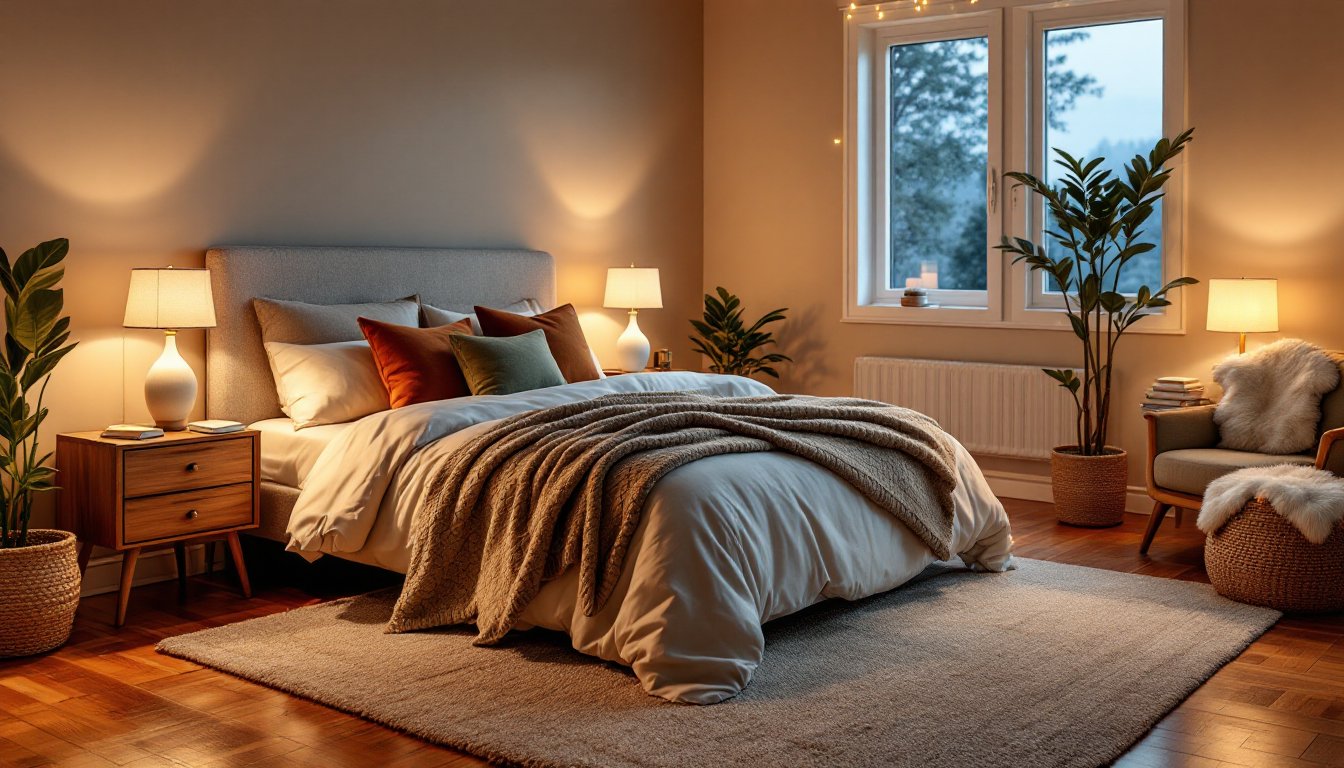
Ideally, place your bed diagonally across from the door, against a solid wall. This position lets you see anyone entering without being in the direct path of energy rushing through the doorway. If you’ve ever felt uneasy sleeping with your back to a door, that’s the intuitive reason behind this placement.
Headboard placement matters structurally and energetically. Mount the headboard against a solid wall, not a window, not floating in the middle of the room. Use at least two 3-inch screws into wall studs (typically spaced 16 inches on center) for a queen or king headboard. A secure, solid headboard provides literal and symbolic support while you sleep.
Avoid placing your bed:
• Directly in line with the door (called the “coffin position”)
• Under a window, which offers neither solid support nor protection from drafts
• Against a wall shared with a bathroom, where water pipes create disrupting energy
• Under exposed ceiling beams, which create oppressive downward pressure
If your room’s dimensions force one of these compromises, you can mitigate issues. For a bed under a beam, paint the beam the same color as the ceiling to visually minimize its weight, or hang a canopy to create a buffer. For a bed near the door, position a substantial piece of furniture like a dresser or folding screen between the door and bed to redirect energy flow.
Leave approximately 24-36 inches of clearance on at least two sides of the bed for easy access and balanced energy. In a small bedroom, prioritize clearance on the side you use most, but avoid pushing the bed entirely against a wall if possible.
Optimal Furniture Placement for Balanced Energy Flow
After positioning the bed, arrange remaining furniture to support smooth movement and visual balance. Good bedroom feng shui layout treats furniture arrangement like planning electrical circuits, you want clear pathways without bottlenecks.
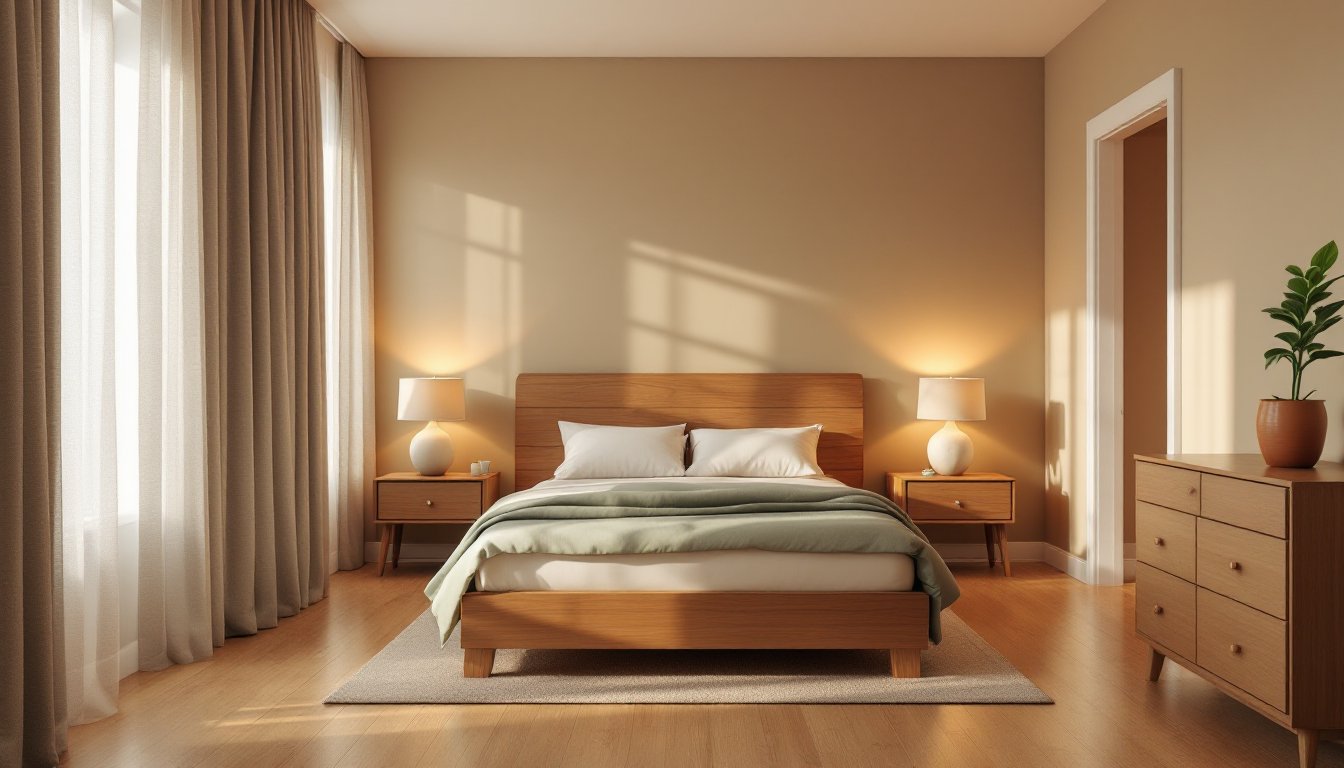
Nightstands should be symmetrical if you share the bed. Matching nightstands (or at least similar heights and mass) on both sides create visual and energetic balance. This doesn’t mean buying a matching set, two different pieces of similar scale work fine. Mount them securely or choose freestanding pieces with enough weight to feel stable.
Dressers and storage belong opposite the bed or on side walls, never positioned so you face them from bed with the drawers pointing at you. In feng shui, sharp corners and protruding furniture edges create “poison arrows” that direct aggressive energy. If a dresser corner points toward the bed, position a plant or round object on top to soften the angle.
Seating like chairs or a small bench adds earth element grounding, but avoid exercise equipment, desks, or anything associated with work. These introduce yang energy that conflicts with the bedroom’s primary purpose. If you must keep a desk in your bedroom, screen it off with a folding partition or substantial curtain when not in use.
Consider pathways around furniture. You should be able to walk from the door to the bed, to the closet, and to windows without zigzagging around obstacles. A general rule: maintain at least 24 inches of walking space in main traffic paths, though 30-36 inches feels more comfortable and allows chi to flow without restriction.
Mirrors require special attention. According to principles highlighted in resources like design guides focused on Feng Shui, never position a mirror where it reflects the bed directly. This creates restless energy and symbolically brings a third party into the relationship. If you need a full-length mirror for dressing, mount it inside a closet door or on a wall perpendicular to the bed.
What to Avoid in Your Feng Shui Bedroom Layout
Certain layout choices actively disrupt bedroom energy, regardless of your room’s size or shape. Avoid these common mistakes:
Electronics and screens: TVs, computers, and tablets emit electromagnetic fields and stimulate yang energy. If you can’t remove them entirely, unplug devices at night and cover screens with fabric. Mount TVs at least 6 feet from the head of the bed, and never position a TV directly facing the bed at close range.
Clutter, especially under the bed: Storage bins crammed under the bed block energy flow and create stagnant chi. If you must use under-bed storage in a small space, limit it to soft items like linens in low-profile containers, and leave several inches of clearance. Platform beds with enclosed bases trap energy worse than beds with open space underneath.
Water features and aquariums: Water elements belong in wealth or career areas of a home according to the bagua map, not bedrooms. They introduce too much active yang energy and can symbolize financial or emotional drain in this context.
Too many books: Shelving loaded with books, especially directly over or beside the bed, creates mental stimulation and a subtle sense of weight. If you keep books in the bedroom, limit them to current reading in a small nightstand drawer.
Collections and memorabilia: Family photos, trophies, and collections introduce memories and energy from other times and people. Keep these in common areas or home offices. The bedroom should focus on present rest and partnership.
Dead or dying plants: While healthy plants add beneficial wood element energy, struggling plants introduce decay. If you can’t keep bedroom plants thriving (often due to low light), skip them entirely rather than creating negative symbolism.
Sharp angles aimed at the bed: Beyond dresser corners, watch for shelving edges, wall-mounted fixtures, and architectural features that create pointed angles. Soften them with fabric, reposition furniture, or place rounded objects to deflect energy.
Colors, Materials, and Decor That Enhance Bedroom Feng Shui
Color and material choices amplify or undermine your bedroom feng shui layout. These elements work together to create the room’s overall energy signature.
Optimal bedroom colors lean toward warm, muted tones that support rest:
• Soft earth tones (warm beiges, taupes, terracotta)
• Muted greens (sage, moss, celadon)
• Gentle blues (dusty blue, periwinkle, but avoid intense navy)
• Warm neutrals (cream, warm gray, soft white)
Avoid bright reds, intense oranges, or stark white. These stimulate yang energy better suited to kitchens, dining rooms, or entryways. If you love bold color, introduce it through easily changeable elements like throw pillows or a single accent wall rather than saturating the room.
Material selection balances the five elements:
• Wood: Hardwood bed frames, bamboo blinds, wooden nightstands (avoid particle board or MDF when possible, solid wood or quality plywood feels more substantial)
• Earth: Ceramic lamps, clay pottery, natural stone accents
• Metal: Minimal, perhaps metal drawer pulls or a wrought iron headboard, but don’t overload
• Fire: Use sparingly through candles or warm lighting, never actual fire features
• Water: Very limited, a small fountain is acceptable if placed carefully away from the bed, but many practitioners avoid water entirely in bedrooms
Textiles should feel substantial and natural. Cotton, linen, wool, and silk in good-quality weaves create better energy than synthetic materials. When selecting sheets, look for thread counts between 300-500 (higher doesn’t always mean better, above 500 often just means thinner, twisted threads).
Lighting requires layering. Install a dimmer on overhead fixtures (a simple single-pole dimmer retrofit takes about 15 minutes with basic electrical knowledge and a screwdriver). Add bedside lamps with warm LED bulbs (2700-3000K color temperature) for reading. Avoid harsh fluorescent lighting, which creates jarring, unnatural energy.
Window treatments balance privacy, light control, and material warmth. Many interior design approaches recommend layering sheer panels with heavier curtains or blinds. In feng shui terms, this gives you control over yin and yang, sheers for soft, filtered light during the day: room-darkening layers for deep yin energy at night.
Room-Specific Layout Tips for Different Bedroom Shapes
Not every bedroom offers ideal feng shui proportions. These shape-specific strategies help you work with what you’ve got.
Small bedrooms (under 120 sq ft): Prioritize bed placement over additional furniture. A queen bed with two wall-mounted floating nightstands (mounted into studs with heavy-duty brackets rated for at least 50 lbs each) saves floor space while maintaining symmetry. Use vertical storage and keep the floor as clear as possible to prevent stagnant energy in a confined space.
Long, narrow bedrooms: Place the bed on one short wall in the commanding position, leaving the length of the room as open pathway. A narrow bedroom often forces compromises, if you can’t achieve the diagonal commanding position, prioritize a solid wall behind the headboard and visibility to the door over perfect diagonal placement.
Square bedrooms: These offer the most layout flexibility. Center the bed on the wall opposite or diagonal to the door with symmetrical furniture placement on both sides. Square rooms naturally support balanced energy distribution.
Bedrooms with multiple doors or windows: Treat each opening as an energy pathway. If your bedroom has a door to an ensuite bathroom and another to a hallway, position the bed so you have sight lines to both. According to home styling resources that cover spatial planning principles, rooms with multiple openings benefit from substantial furniture pieces that ground the space, think a substantial headboard and heavier nightstands rather than lightweight, minimal pieces.
Sloped ceilings or attic bedrooms: Avoid placing the bed directly under the lowest part of a sloped ceiling. The compressed space creates oppressive energy. Position the bed where you have at least 7 feet of clearance above the mattress. If that’s impossible, paint the sloped ceiling a lighter color than the walls to visually lift it.
Bedrooms with architectural quirks: Columns, alcoves, and odd angles require creative solutions. A column near the bed can be softened with fabric draping or flanked with plants. An alcove might become an ideal meditation or dressing area rather than wasted space. Work with the architecture rather than fighting it, feng shui adapts to real-world constraints.
Conclusion
A feng shui bedroom layout doesn’t require expensive furniture or a complete renovation. Start with bed placement in the commanding position, clear clutter, and introduce balanced elements through color and materials. Most adjustments involve rearranging what you already own and being intentional about what you bring into the space. The changes might feel subtle at first, but optimizing energy flow affects sleep quality and daily energy more than most people expect. Test the principles methodically, give yourself a few weeks to adjust, and notice which changes genuinely improve how you feel in the space.