Table of Contents
ToggleOak cabinets have weathered decades of design trends, from the honey-stained golden oak boom of the ’80s to today’s shift toward cleaner, pared-back kitchen aesthetics. Yet they’re still installed in thousands of homes every year, and for good reason. Oak delivers durable hardwood construction, distinctive grain character, and surprising versatility when you understand how to work with its color and texture. Whether you’re living with dated medium oak kitchen cabinets or planning a new build around modern oak kitchen cabinets, this guide breaks down the species, finishes, update strategies, and design approaches that make oak work in 2026.
Key Takeaways
- Oak kitchen cabinets rank among the hardest domestic hardwoods with exceptional durability against daily wear, dings, and scratches, making them a practical choice for long-term kitchen investments.
- White oak offers cooler tones and tighter grain than red oak, making it ideal for modern applications, while red oak’s warmer hues and pronounced grain work best in traditional or craftsman-style kitchens.
- Updating existing oak cabinets through hardware swaps, refinishing with gray-toned stains, or painting can modernize your kitchen for $200–$7,000 instead of paying $8,000–$25,000+ for full replacement.
- Modern oak kitchen cabinets pair best with cool-toned countertops (white quartz or honed marble), neutral backsplash tiles, and soft gray-greige wall colors to balance the wood’s warm undertones and achieve a contemporary look.
- Oak’s open grain requires weekly cleaning with mild soap and water, plus semi-annual maintenance with beeswax-based polish and immediate attention to water damage near sinks and dishwashers to preserve the finish.
- At $150–$350 per linear foot installed, oak cabinets deliver mid-range pricing and excellent repairability compared to premium hardwoods, with a 10–15 year lifespan extension possible through refinishing rather than replacement.
Why Oak Kitchen Cabinets Remain a Popular Choice
Oak ranks among the hardest domestic hardwoods commonly used for cabinetry, landing around 1,290 to 1,360 on the Janka hardness scale depending on species. That translates to real-world resistance against dings from dropped cookware, scratches from daily use, and wear around high-traffic drawer pulls. It’s harder than maple, cherry, or most softwoods, so cabinets hold up through decades of meal prep.
The open grain structure of oak cabinets kitchen projects creates bold, linear patterns that remain visible even under stain or clear coat. This pronounced figuring is either a feature or a challenge, depending on the look you’re after. For traditional or craftsman-style kitchens, that texture adds warmth and character. For contemporary designs, it can anchor a space that might otherwise feel too sterile.
From a sourcing standpoint, oak is widely available across North America and competitively priced compared to exotics or specialty hardwoods. Cabinet-grade oak is milled in standard thicknesses (3/4-inch face frames, 1/2-inch panels), so replacement parts and custom additions are straightforward if you need to expand or repair down the line. If you’re working with a cabinet shop, oak’s machinability also means cleaner dado joints, coped rails, and decorative edge profiles without excessive tear-out.
Types of Oak Wood and Finishes for Kitchen Cabinets
Not all oak is the same species, and the difference between red and white oak affects both appearance and performance in a kitchen environment.
Red Oak vs. White Oak: Which Is Right for Your Kitchen?
Red oak shows warmer undertones, pinkish to amber hues, and features more pronounced grain with visible pores. It’s slightly softer (Janka ~1,290) and more porous, which means it absorbs stain unevenly if you don’t use a wood conditioner first. Golden oak kitchen cabinets from the ’80s and ’90s were almost always red oak with a honey-toned stain. The grain reads busy, so it pairs best with traditional door styles: raised panels, cathedral arches, or applied moldings.
White oak runs cooler, tan to light brown with subtle gray undertones, and shows tighter, straighter grain. It’s marginally harder (Janka ~1,360) and less porous, so stain goes on more evenly and the finished surface resists moisture better. White oak is the go-to for light oak kitchen cabinets modern installations, especially when wire-brushed, cerused, or finished with a matte clear coat to highlight the natural grain without adding yellow or orange tones.
For finish options, clear coats (polyurethane, conversion varnish, or water-based topcoats) preserve the wood’s natural color and grain. Stains range from light natural tones to dark walnut or ebony: just remember that oak’s open grain will show through any stain color, so test on scrap first. Painted finishes require grain filler (a paste applied before primer to level the pores) if you want a smooth, furniture-grade look: skipping filler on oak results in visible grain telegraphing through paint, which some homeowners embrace for a textured, farmhouse aesthetic but others find unfinished-looking.
How to Update Outdated Oak Cabinets Without Replacing Them
Full cabinet replacement runs $8,000 to $25,000+ for an average kitchen, so many homeowners look for less invasive ways to modernize existing oak boxes. Here’s how to make oak kitchen cabinets look modern without paint, and what to do if you do decide to paint.
Hardware swap: Replace brass or wooden knobs with matte black bar pulls, brushed nickel handles, or leather pulls. Switching from traditional knobs to modern, streamlined hardware instantly shifts the cabinet’s visual era. Fill old screw holes with wood filler (Minwax or Bondo) if the new hardware doesn’t align, sand flush, and touch up the finish.
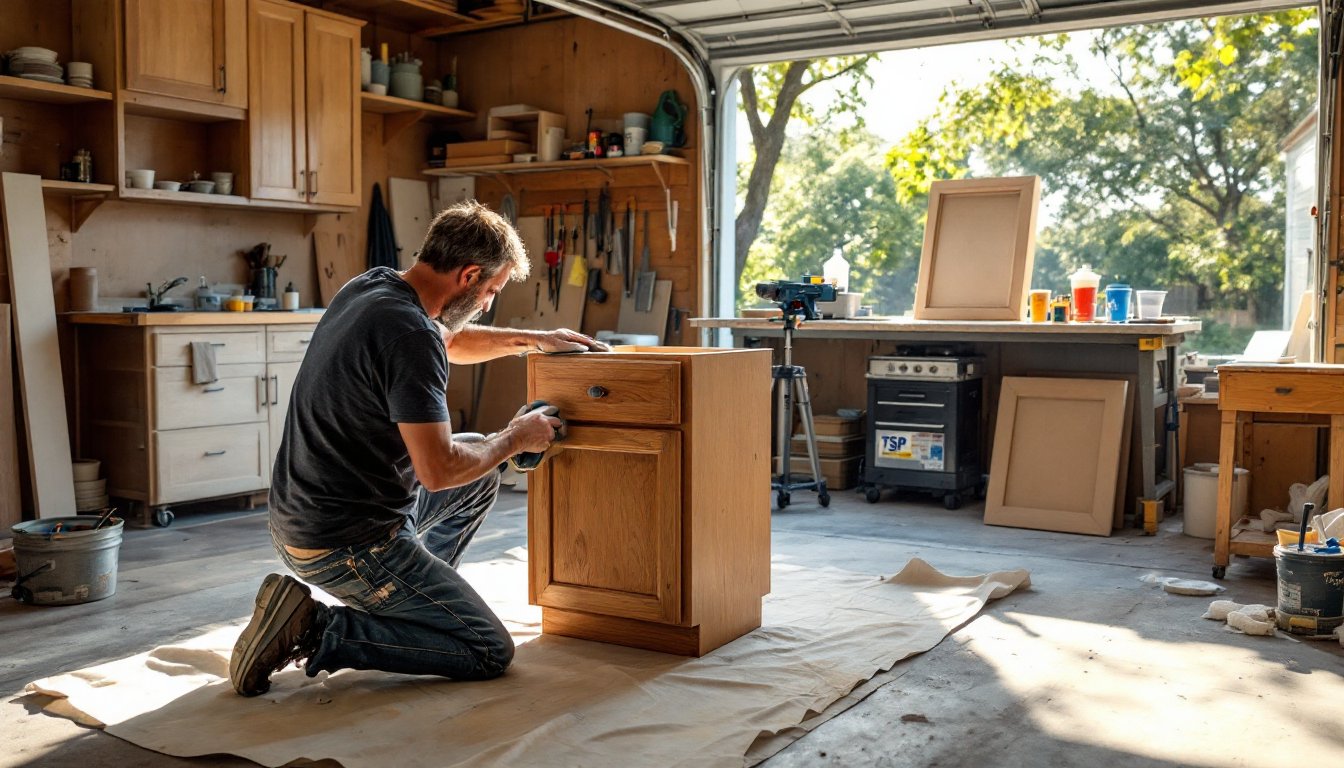
Refinishing the existing stain: Strip the old polyurethane with citrus-based stripper (3M Safest Stripper or Citristrip), sand to bare wood with 120-grit followed by 180-grit, then apply a gray-toned or weathered oak stain (Minwax Classic Gray, Varathane Weathered Oak). Finish with water-based polyurethane in satin or matte to avoid the yellowing common with oil-based topcoats. This process keeps the grain visible but cools down the orange.
Painting: If you prefer how to make oak kitchen cabinets look modern without the grain showing, painting is the route, but prep is non-negotiable. Clean with TSP (trisodium phosphate) to remove grease, lightly sand with 150-grit to scuff the existing finish, apply oil-based primer (Zinsser Cover Stain or BIN shellac-based primer) to seal tannins and block stain bleed, then topcoat with semi-gloss or satin cabinet paint (Benjamin Moore Advance, Sherwin-Williams ProClassic). Use a foam roller for flat surfaces and a fine-bristle brush for details. Skip the grain filler if you’re okay with texture: use it if you want glass-smooth doors. Allow 72 hours cure time before reinstalling hardware and closing doors fully.
Door replacement only: Swap flat-panel or slab doors onto existing face frames. Many cabinet shops sell unfinished or prefinished oak slab doors in standard sizes (widths from 9″ to 24″, heights 12″ to 42″). Pair them with concealed European hinges for a streamlined look. This approach works if your boxes and frames are structurally sound but the door style is the main dated element.
Designing a Modern Kitchen Around Oak Cabinets
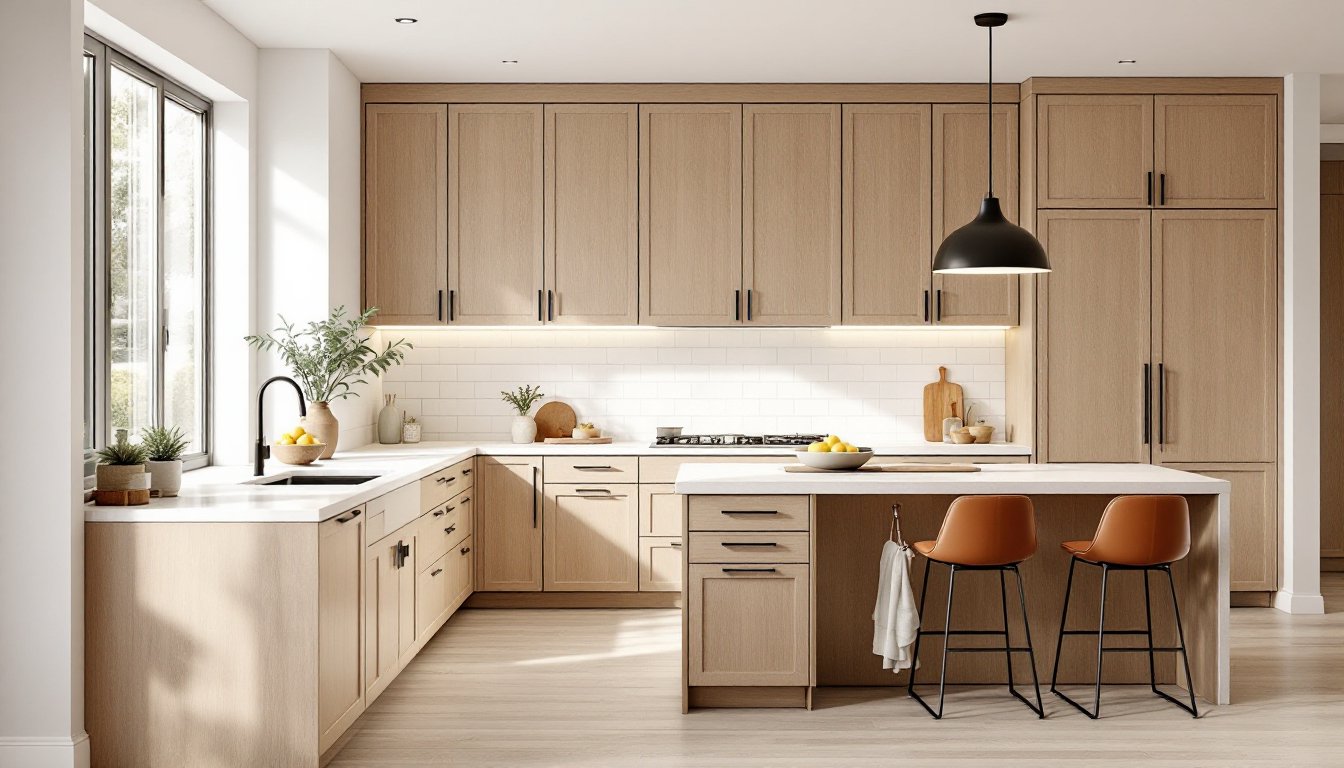
Modern oak kitchen cabinets can anchor a contemporary kitchen if you balance the warm wood tone with cooler, cleaner elements. Start with countertops: white quartz, honed marble, or concrete-look porcelain slabs contrast nicely against medium to light oak without competing visually. Avoid busy granite patterns that clash with oak’s grain.
Backsplash choices matter. Subway tile in matte white, handmade zellige in soft neutrals, or large-format porcelain in solid colors keep the focus on the cabinets without adding visual noise. Skip mosaic or patterned tile if your oak has heavy grain figuring, you’ll end up with two competing textures. For inspiration on how contemporary kitchens balance natural wood with streamlined surfaces, many design sourcebooks showcase cabinetry-forward layouts.
Lighting brings out oak’s natural warmth or tamps it down depending on color temperature. Use 3000K LED bulbs (warm white) if you want a cozy feel, or 4000K (neutral white) to cool things down and reduce yellow cast. Under-cabinet LED strips (12V low-voltage or plug-in puck lights) eliminate shadows on countertops and highlight the grain on lower cabinets.
Paint adjacent walls in soft whites with gray or greige undertones (Benjamin Moore Chantilly Lace, Sherwin-Williams Agreeable Gray) rather than warm creams, which amplify oak’s orange tones. If you want color, consider sage green, charcoal, or deep navy on a single accent wall or island base to ground the oak and add modern contrast.
Flooring should provide visual relief. Wide-plank light or medium-toned hardwood, luxury vinyl plank in gray-washed oak, or large-format matte tile work well. Avoid matching the floor to the cabinets exactly, it flattens the space and reads dated.
Maintenance and Care Tips for Oak Kitchen Cabinets
Oak’s open grain traps grease, dust, and grime more readily than closed-grain woods like maple. Clean cabinet faces weekly with a microfiber cloth dampened with warm water and a few drops of dish soap. Avoid all-purpose sprays with ammonia or silicone, which leave buildup in the grain and dull the finish over time.
For sticky residue around handles or cooktop areas, use mineral spirits on a clean rag (work in a ventilated area, wear nitrile gloves). Wipe in the direction of the grain, then follow with a damp cloth to remove any solvent residue. This method cuts grease without stripping the topcoat.
Every 12 to 18 months, recondition the finish with Howard Feed-N-Wax or a similar beeswax-based polish. Apply a thin coat with a soft cloth, let it sit 10 minutes, then buff to a low sheen. This fills minor surface scratches and adds a protective layer. Don’t use oil-based furniture polish (Pledge, Old English): it builds up in oak’s pores and attracts dust.
Watch for water damage near the sink and dishwasher. If you see dark rings or raised grain, the finish has been compromised. Lightly sand the area with 220-grit sandpaper, wipe clean, and apply a matching topcoat (test on an inconspicuous spot first). For painted cabinets, touch up chips immediately with matching paint to prevent moisture from swelling the wood.
Hardware tightens and loosens with use. Check screws on hinges and pulls every six months and snug them up with a screwdriver. If screw holes strip out, remove the screw, insert a wooden toothpick or golf tee dipped in wood glue, let dry, trim flush, then re-drill a pilot hole.
Cost Considerations: Are Oak Cabinets Worth the Investment?
Semi-custom oak cabinets typically run $150 to $350 per linear foot installed, with pricing influenced by door style, finish complexity, and hardware. Stock oak cabinets from big-box retailers start around $75 to $150 per linear foot but offer limited sizing and finish options. Custom oak cabinetry from a local shop can reach $500+ per linear foot if you’re adding features like soft-close drawers, roll-outs, or built-in spice racks.
Compare that to maple ($180–$400/linear foot) or cherry ($250–$500/linear foot), and oak sits in the middle, less expensive than premium hardwoods but pricier than birch or thermofoil. If budget is tight, cabinet-grade oak plywood boxes with solid oak face frames and doors deliver most of the durability at a lower cost than all-solid construction.
Resale value is harder to quantify. In markets where traditional or transitional styles dominate, oak cabinets, especially kitchens with oak cabinets updated with modern hardware and neutral finishes, hold appeal. In ultra-contemporary markets, painted or exotic hardwood cabinets may add more perceived value. If you’re planning to stay in the home 10+ years, durability and personal preference outweigh resale trends.
For DIY refinishing, budget $200 to $600 in materials (stripper, sandpaper, stain, topcoat, brushes) and 20 to 40 hours of labor for an average kitchen. Professional refinishing costs $3,000 to $7,000, depending on kitchen size and finish type. Both options deliver significant savings versus replacement and can extend cabinet life another 10 to 15 years.
Factoring in longevity, repairability, and the ability to update finishes multiple times over the cabinet’s life, oak cabinets offer solid value, especially if you’re comfortable with periodic maintenance and aren’t chasing every design trend. For additional perspectives on kitchen organization and material choices, many homeowners find that functional layout matters as much as cabinet species when it comes to daily satisfaction.